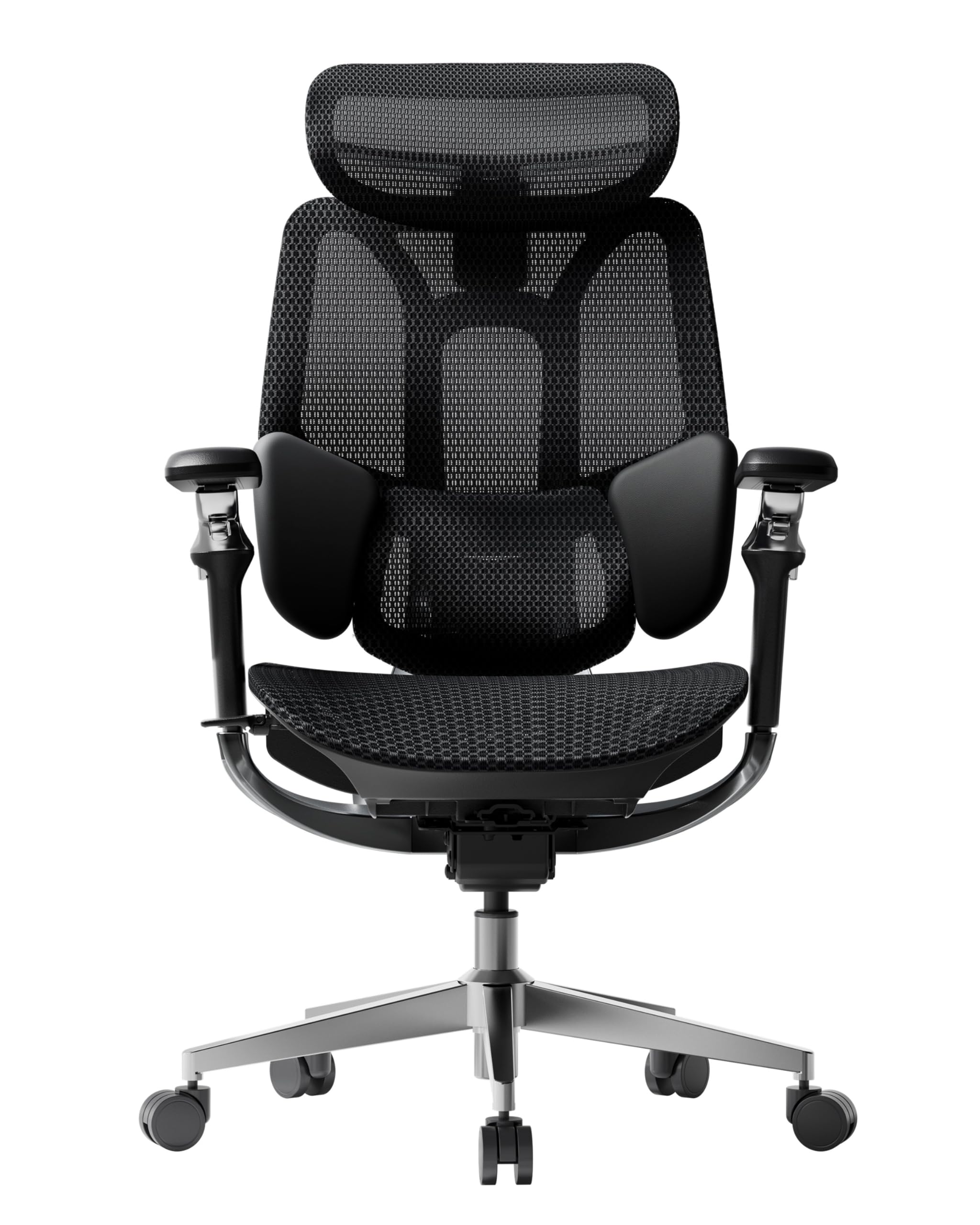
This review hbada e3 pro looks at a mesh office chair built around extensive posture adjustments, including a three-zone lumbar system, a dual-axis headrest, and armrests that rotate and fold.
It may suit people who shift between focused desk work and reclining breaks, provided its size and support feel right for their body and workspace.
Hbada E3 Pro Review Summary
The quick verdict
1,000+ ratings
Read Amazon ReviewsHbada E3 Pro Ergonomic Office Chair
A mesh office chair for desk workers who want independently adjustable lumbar, head, arm, and recline support across a broad stated height range.
- Three-zone floating lumbar support has pivoting lateral wings and 60 mm of vertical adjustment.
- The dual-axis headrest adjusts 70 mm in depth, 40 mm in height, and rotates through 70 degrees.
- The chair reclines to a maximum of 140 degrees, with described settings at 105, 115, 130, and 140 degrees.
- Gravity-sensing tilt is designed to adjust resistance according to body weight.

Pros
- The lumbar system offers both vertical positioning and pivoting side wings.
- Headrest adjustment covers depth, height, and rotation rather than relying on a single position.
Consider before buying
- The large number of adjustments may take time to configure, especially if you prefer a simple, fixed-feel chair.
- The 140-degree recline is a maximum; confirm that the chair’s overall dimensions and reclined position fit your available space.
Read the full review summary
The E3 Pro’s defining idea is adjustability at several contact points.
Its lumbar wings pivot to follow the back, while the lumbar assembly moves vertically; the headrest adjusts in depth, height, and angle; and the armrests offer multiple rotations and folding.
Together, those features give buyers more ways to tune the chair than a basic mesh task chair.
Its listed fit range is 5 feet 1 inch to 6 feet 5 inches, with an adjustable backrest, lumbar position, and seat depth. Recline reaches up to 140 degrees, with four described positions for work and rest.
Those details make it a candidate for people who change posture through the day, but a broad fit range cannot substitute for checking whether the seat, headrest, and lumbar contact suit your own proportions.
The buying factors
Hbada E3 Pro Scorecard
Editorial scores reflect listed features and buyer fit; they are not laboratory measurements or customer ratings.
Lumbar adjustability
Three-zone support includes pivoting lateral wings and 60 mm of vertical adjustment for more targeted positioning.
Headrest tuning
The dual-axis headrest provides 70 mm of depth, 40 mm of height, and 70 degrees of rotation.
Armrest flexibility
The armrests combine two 360-degree rotations with 39-degree folding, offering many placement options.
Recline range
Four described positions span focused work through a maximum recline of 140 degrees.
Fit adjustment
Backrest, lumbar, and seat depth adjustments are paired with a stated user-height range of 5 feet 1 inch to 6 feet 5 inches.
Breathable materials
The mesh design is intended to provide flexible support and airflow, though individual comfort will depend on feel and fit.
Capacity and certification
The chair has a listed maximum weight recommendation of 300 pounds and a Class 4 gas cylinder described as SGS-certified, with BIFMA compliance.
Key Features and Specifications of Hbada E3 Pro
- Three-zone floating lumbar support has pivoting lateral wings and 60 mm of vertical adjustment.
- The dual-axis headrest adjusts 70 mm in depth, 40 mm in height, and rotates through 70 degrees.
- The chair reclines to a maximum of 140 degrees, with described settings at 105, 115, 130, and 140 degrees.
- Gravity-sensing tilt is designed to adjust resistance according to body weight.
- Mesh seat and back are described as high-elasticity CloudMesh, with airflow as a design aim.
- Armrests use dual 360-degree rotation and fold by 39 degrees.
- Adjustments include 80 mm of backrest travel, 60 mm of lumbar travel, and 50 mm of seat-depth travel; the stated fit range is 5 feet 1 inch to 6 feet 5 inches.
Pros and Cons of Hbada E3 Pro
Pros
- The lumbar system offers both vertical positioning and pivoting side wings.
- Headrest adjustment covers depth, height, and rotation rather than relying on a single position.
- Four described recline angles allow a range of working and resting postures.
- Rotating and folding armrests offer flexibility for different desk and arm positions.
- A 300-pound maximum weight recommendation and named SGS and BIFMA standards provide useful selection details.
Consider before buying
- The large number of adjustments may take time to configure, especially if you prefer a simple, fixed-feel chair.
- The 140-degree recline is a maximum; confirm that the chair’s overall dimensions and reclined position fit your available space.
- Mesh is a specific seating feel. If you prefer a cushioned upholstered seat, check that the material and contact points suit you before choosing.
Who Should Buy Hbada E3 Pro?
Good fit
Consider the E3 Pro if you want to tune lumbar, head, and arm support instead of relying on a few basic adjustments.
Its pivoting lumbar wings and adjustable headrest are especially relevant if fixed support points tend to land in the wrong place on your back or neck.
The stated height range and seat-depth adjustment also make it worth considering for a shared workspace where users may have different proportions.
It may also suit a desk routine that alternates between upright work and reclined breaks. The four described recline positions and gravity-sensing tilt are meant to accommodate those shifts, while the mesh construction is intended to support airflow.
Before buying, compare the chair’s listed dimensions with your desk and room, and consider whether the maximum 140-degree recline has enough clearance.
Treat the fit range as a starting point, not a guarantee.
Check whether the lumbar wings can sit comfortably against your lower back, whether the headrest aligns with your neck, and whether the adjustable seat depth works for your legs.
Who should skip it
Look elsewhere if you want a straightforward chair with few adjustment points; the E3 Pro’s appeal depends on setting up and using its multiple controls.
It may not be the right fit if you need an upholstered, padded seat or have a firm preference for a particular lumbar feel. Try to assess those contact points before committing.
How the Hbada E3 Pro’s Adjustments Shape the Fit
Lumbar movement for changing posture
The lumbar assembly combines pivoting side wings with 60 mm of vertical movement.
That gives you two ways to position contact: adjust its height, then see whether the wings sit naturally as you move between leaning forward and reclining.
The design suggests responsive support, but comfort depends on where the support meets your back.
Headrest and arm placement
The headrest’s depth, height, and rotation adjustments can help align it to your neck when upright or leaning back. The armrests add a different kind of flexibility, with broad rotation and folding.
Set them for your main work posture first, then check that their position still feels useful when you recline or move closer to the desk.
Recline choices and room planning
The listed angles progress from 105 degrees for focus to 140 degrees for rest, and the tilt mechanism is designed to respond to body weight. This gives the chair a wider posture range than a work-only setup.
Since the maximum angle describes recline rather than a guarantee of comfortable resting, check both your preferred position and the clearance behind the chair.
Sizing and construction details
The stated height range is broad, and adjustments to backrest height and seat depth add some room to personalize the fit. The 300-pound maximum weight recommendation and named cylinder and frame standards are useful screening details.
For a practical fit check, compare the chair’s 27.5-inch depth and width with your workspace and make sure its seat depth can leave a comfortable gap behind your knees.
Alternatives to Hbada E3 Pro
Home Office Desk Chairs alternative
1,000+ ratings
Read Amazon ReviewsSIHOO Doro C300 Pro Ergonomic Office Chair
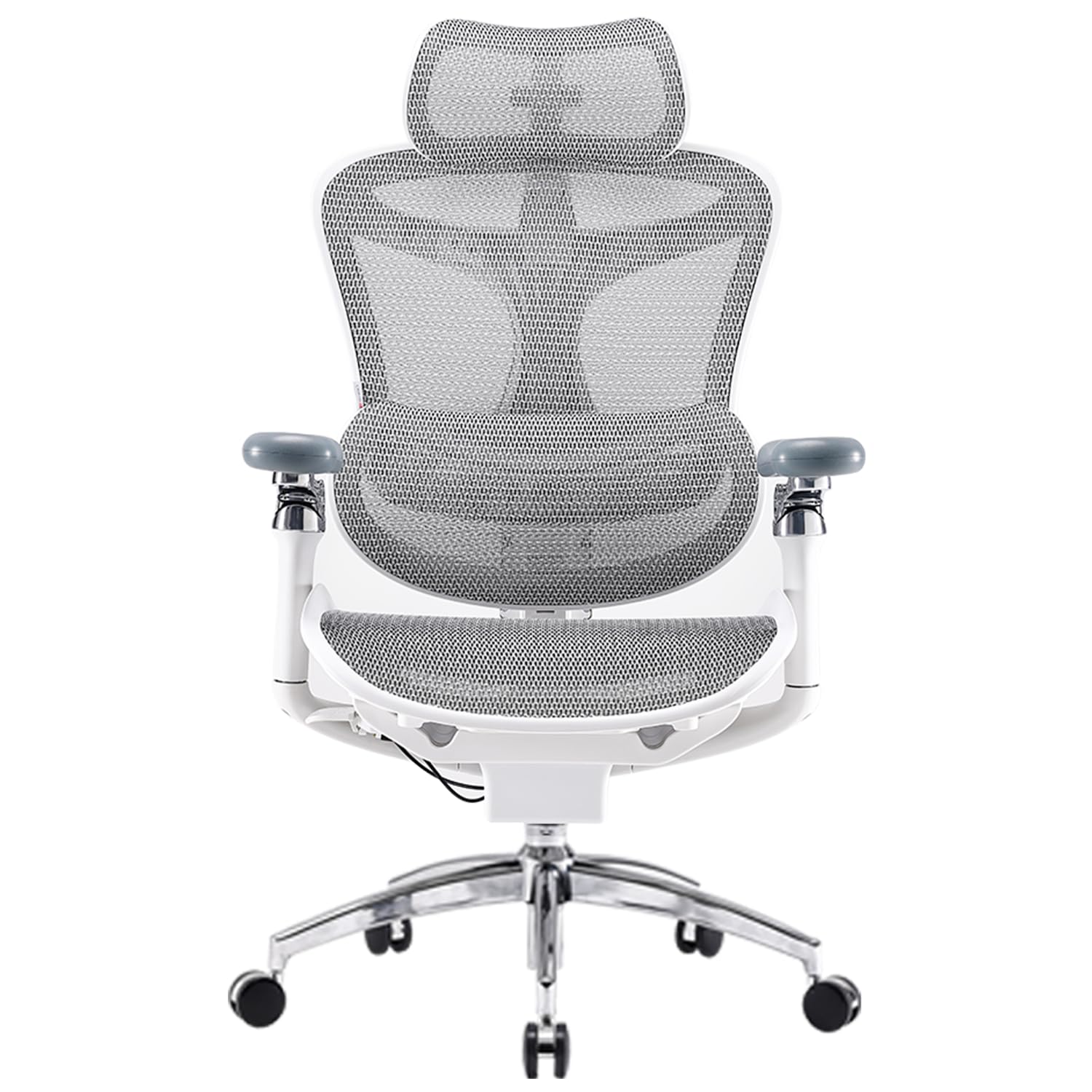
Consider the SIHOO if independently adjustable backrest height, seat depth, and multi-directional armrests are priorities. The Hbada offers a higher maximum recline angle and specifically quantified headrest adjustment; compare which adjustment set better matches your routine.
- The SIHOO Doro C300 Pro lists an adjustable backrest with four positions, adjustable seat depth, dynamic lumbar support, and 6D armrests.
- Its described recline positions are 105, 120, and 135 degrees.
- The Hbada E3 Pro offers pivoting three-zone lumbar support, a headrest with depth, height, and rotation adjustments, and recline up to 140 degrees.
Home Office Desk Chairs alternative
17,000+ ratings
Read Amazon ReviewsSIHOO M18 Ergonomic Office Chair
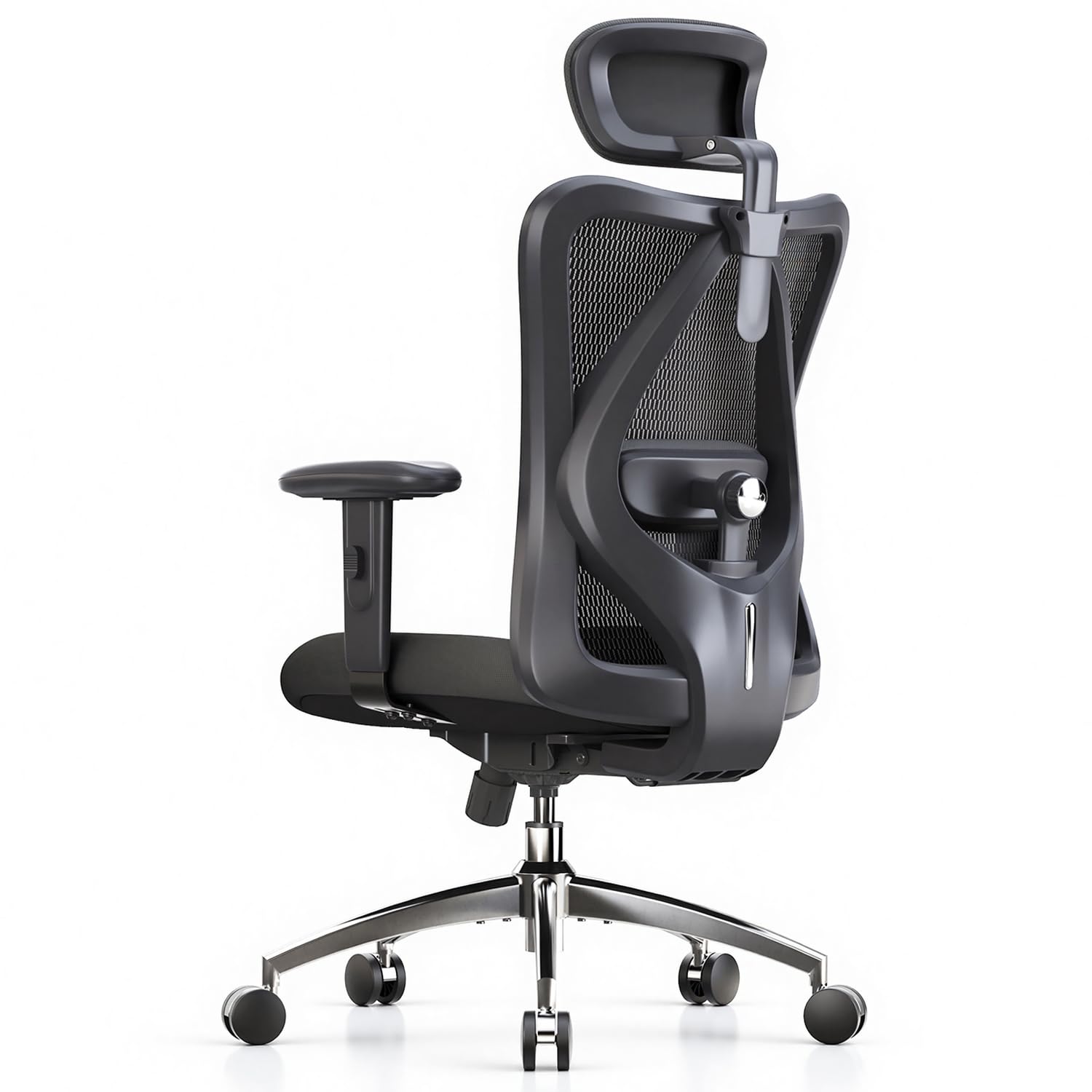
The M18 may fit buyers who want a more conventional set of ergonomic adjustments and a higher stated weight capacity.
Choose the Hbada if its broader listed height range and more detailed headrest, armrest, and recline adjustments better suit your needs.
- The SIHOO M18 describes adjustable seat height, headrest, lumbar support, and back support, with a stated user-height range of 5 feet 6 inches to 6 feet 2 inches and a 330-pound capacity.
- The Hbada E3 Pro provides extensive lumbar, headrest, and armrest adjustment, along with a maximum recline of 140 degrees.
Is Hbada E3 Pro Worth It?
The Hbada E3 Pro is worth considering if you want a mesh office chair with unusually detailed adjustment across the lumbar area, headrest, armrests, and recline.
Its feature set is most compelling for people who vary their sitting posture and are willing to spend time dialing in a fit.
Check dimensions, seat depth, and the feel of the mesh and lumbar contact before buying.
The broad stated height range and many controls are useful starting points, but personal fit should decide whether this chair is right for your desk routine.
Your review at a glance
1,000+ ratings
Read Amazon ReviewsHbada E3 Pro Ergonomic Office Chair
A mesh office chair for desk workers who want independently adjustable lumbar, head, arm, and recline support across a broad stated height range.
- Three-zone floating lumbar support has pivoting lateral wings and 60 mm of vertical adjustment.
- The dual-axis headrest adjusts 70 mm in depth, 40 mm in height, and rotates through 70 degrees.
- The chair reclines to a maximum of 140 degrees, with described settings at 105, 115, 130, and 140 degrees.
- Gravity-sensing tilt is designed to adjust resistance according to body weight.