The best wireless mice depend on whether you prioritize portable work, a tailored grip, multi-device control, or gaming features. These options range from compact everyday models to specialized gaming mice, so match connectivity, size, and controls to your setup.
Quick Top Products
JLab GO Charge Wireless Mouse
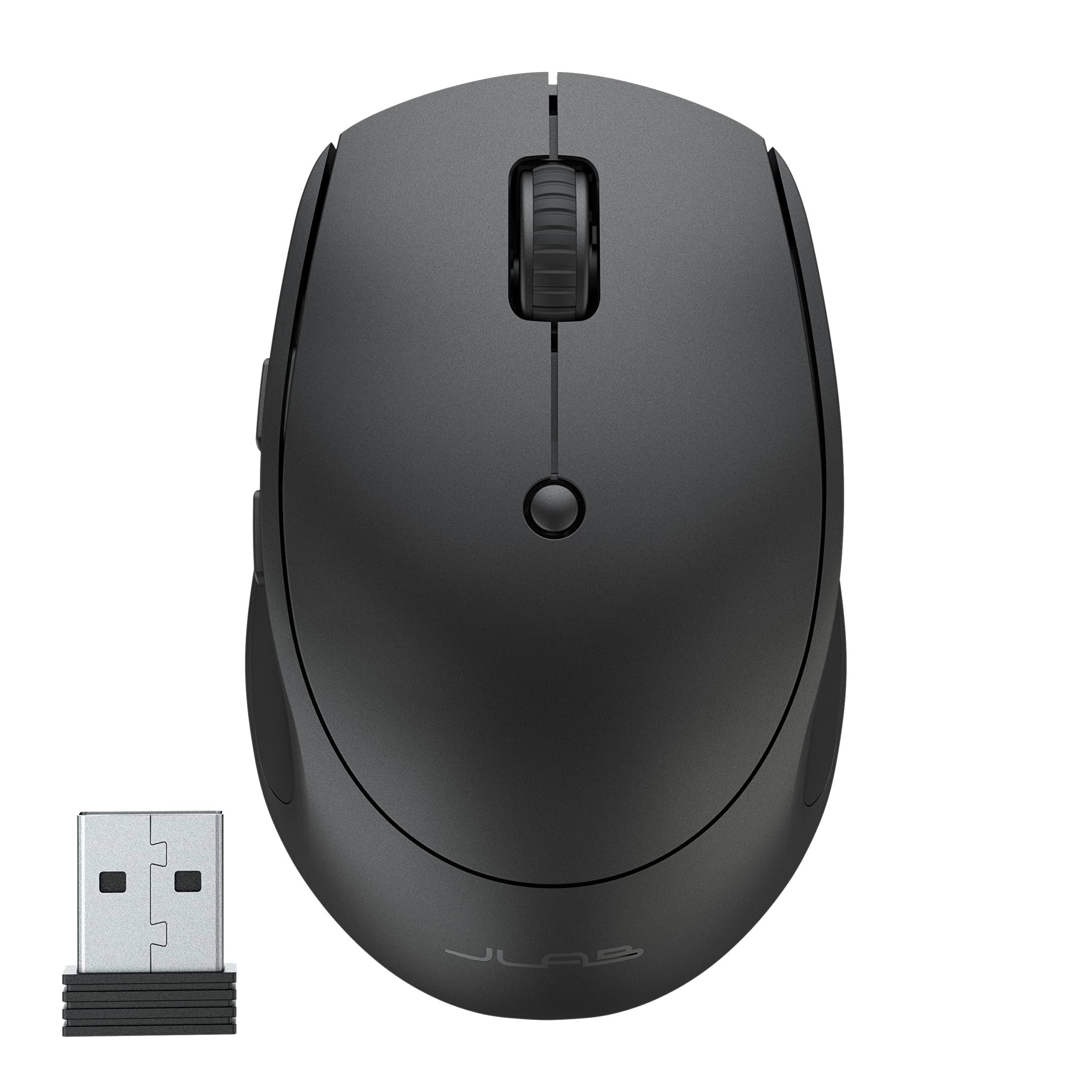
- Pairs with up to three devices via Bluetooth or a USB dongle.
- Compact design and silent clicks suit portable work.
- Rechargeable battery lasts 4+ months per charge.
Best For: People who want a small rechargeable mouse for travel and switching among several devices.

ESR MagMouse Snap-to-Carry
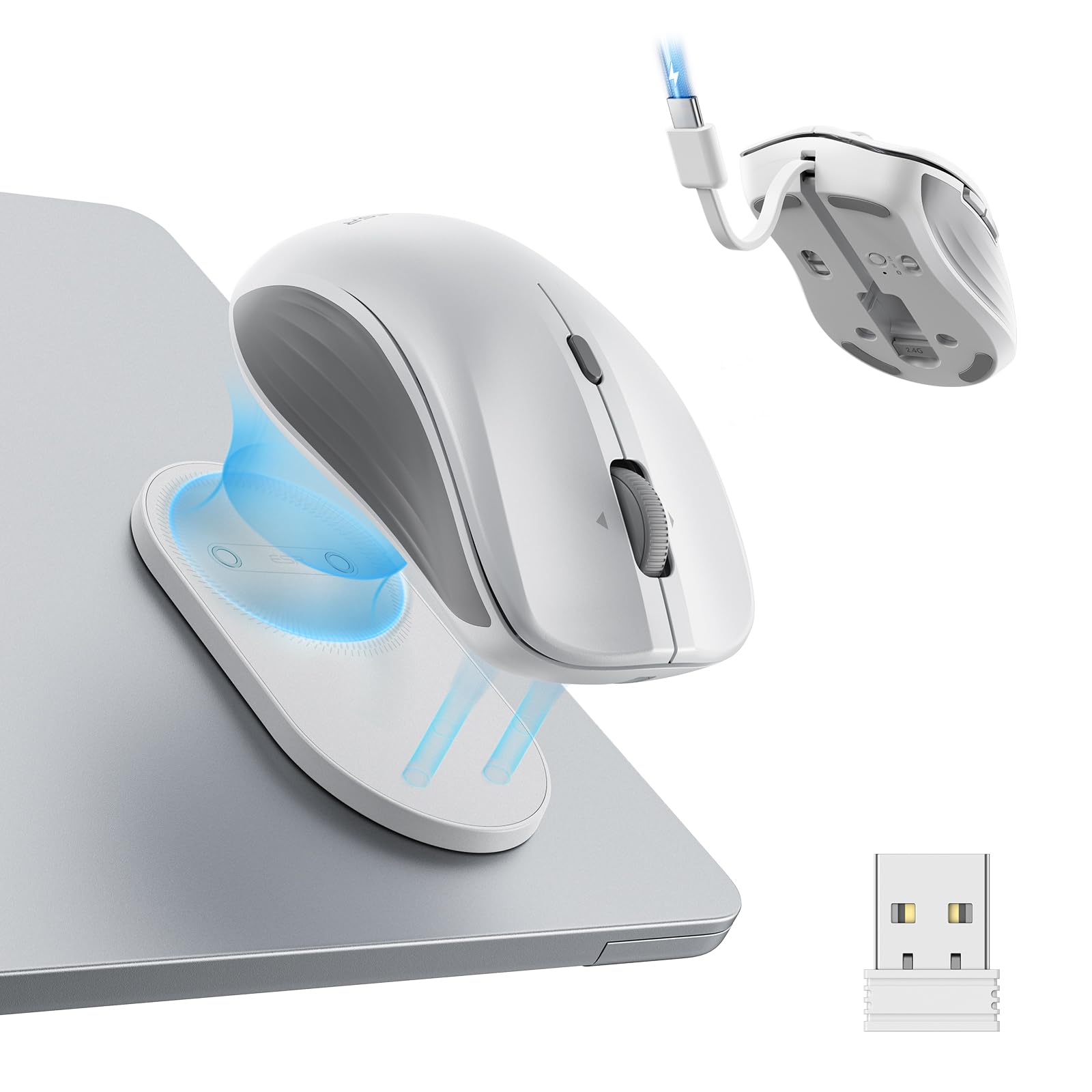
- Connects through Bluetooth 5.0 or a 2.4 GHz dongle.
- Magnetic base snaps the mouse onto its reusable adhesive holder.
- Built-in USB-C cable and up to 160 hours of use per full charge.
Best For: Laptop users who want a mouse and holder that attach together for mobile work.
JLab JBuds Wireless Mouse
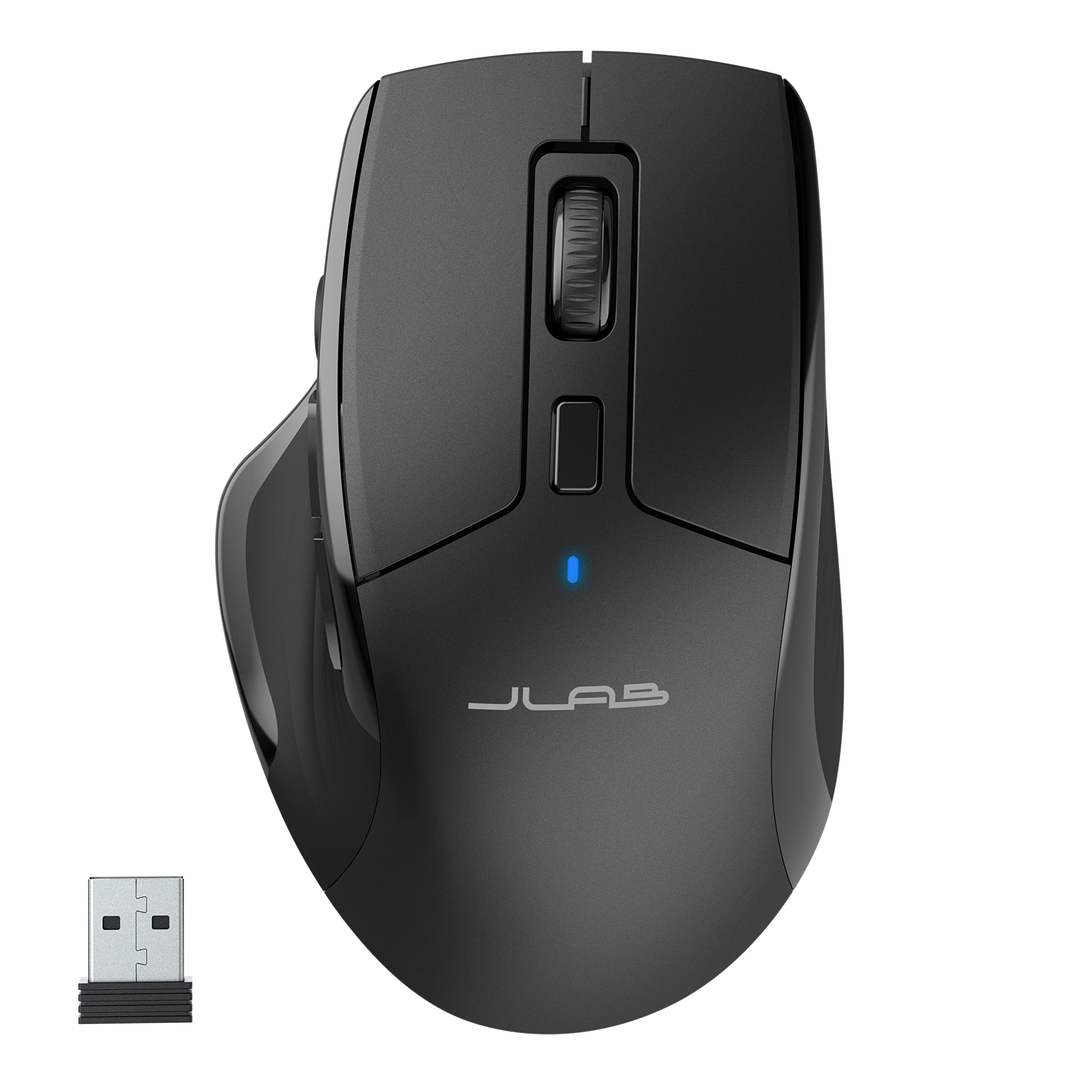
- Connects to up to three devices through Bluetooth 5.2 or a dongle.
- Full-size ergonomic shape with seven programmable buttons.
- Silent clicks and customizable profiles support office use.
Best For: Desk users who want a full-size mouse with quiet clicks and customizable controls across devices.
JLab Epic Wireless Mouse
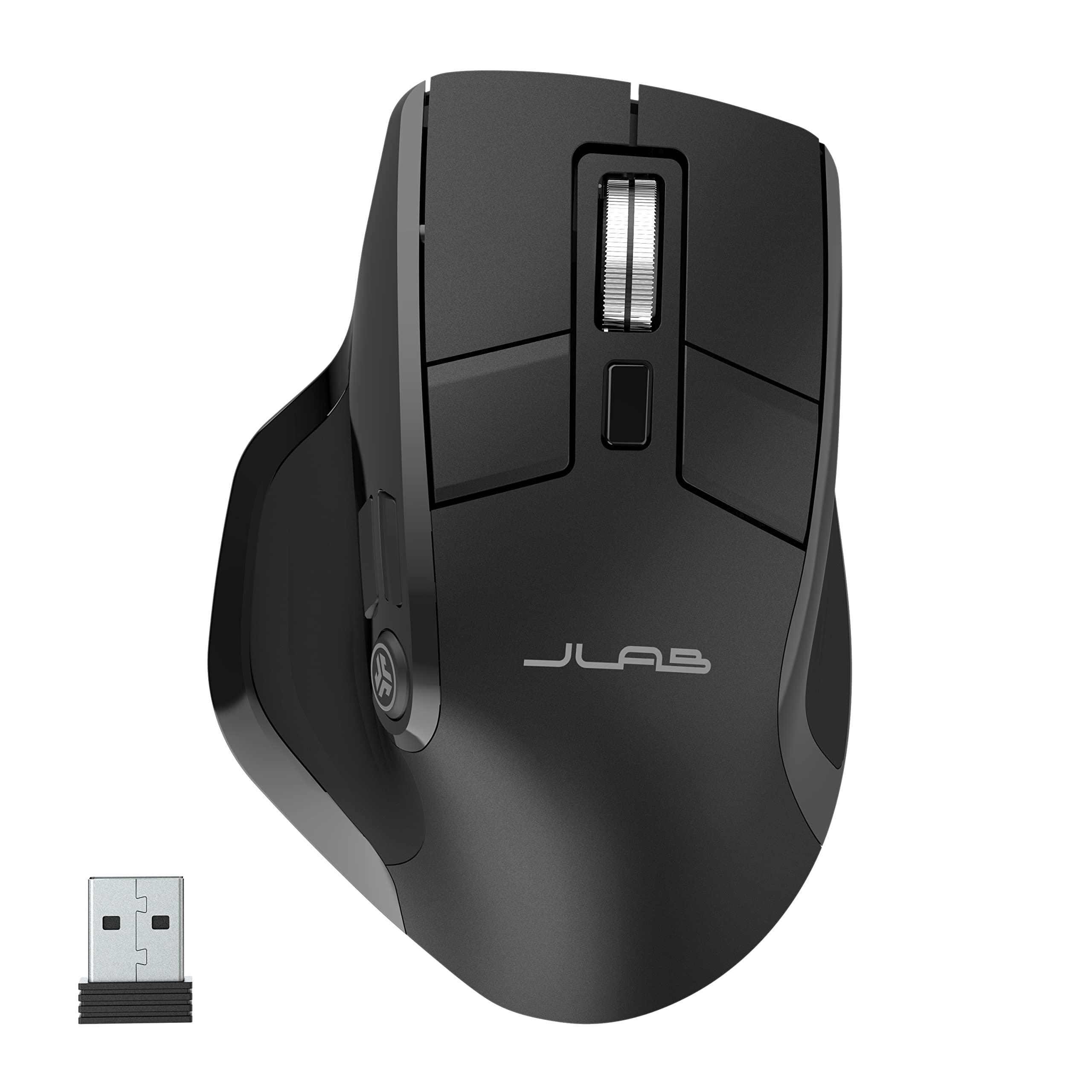
- OLED display shows current DPI and battery level.
- Pairs with up to three devices over Bluetooth 5.2 or a dongle.
- Full-size shape and silent clicks suit quiet workspaces.
Best For: Desk users who want a full-size mouse with a screen for battery and DPI status.
Contour Unimouse Wireless
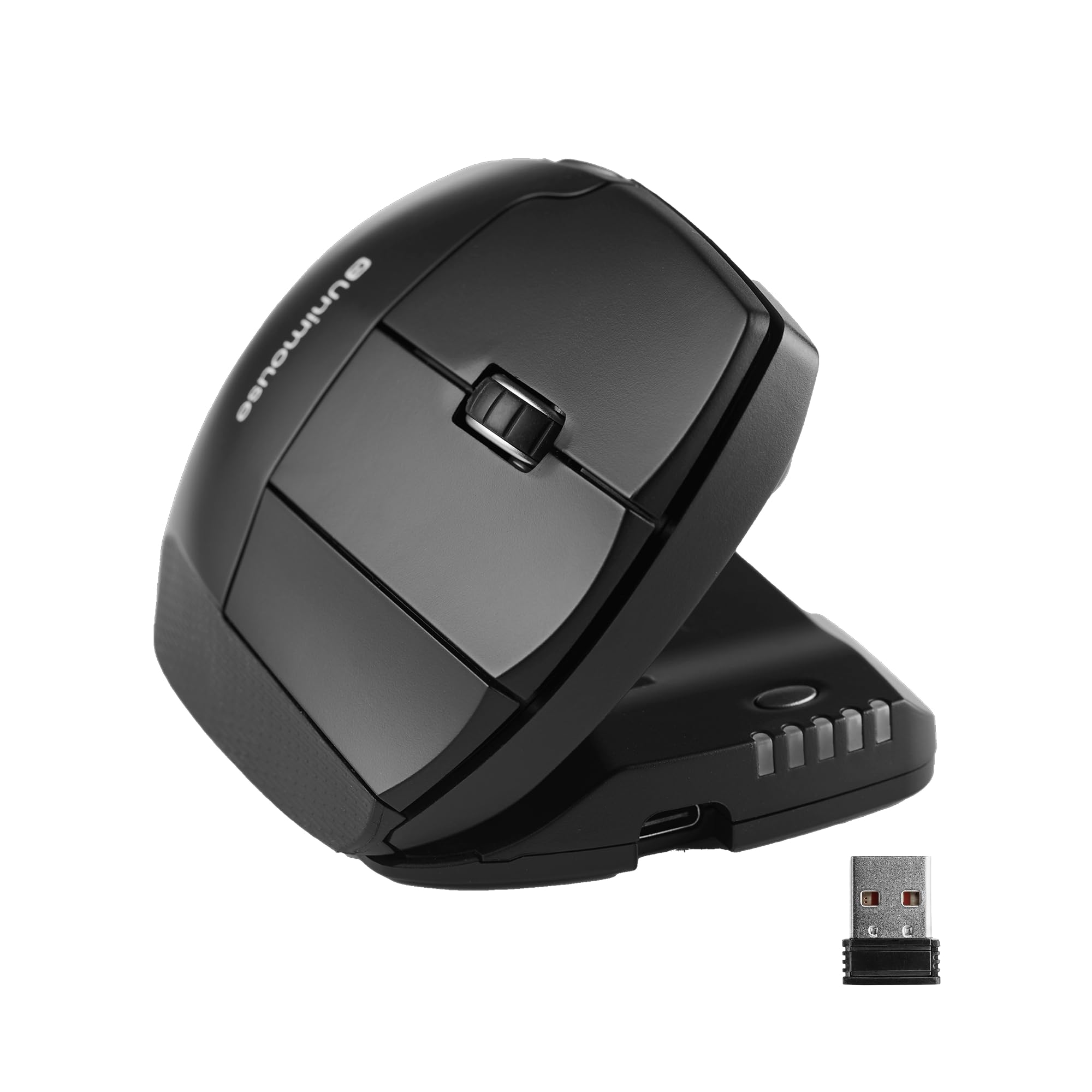
- Adjustable tilt ranges from 35° to 70°.
- Thumb support slides, pivots, and rotates for a custom grip.
- Six programmable buttons and a rechargeable battery rated up to 12 weeks.
Best For: Right-handed users who want to adjust a vertical mouse's tilt and thumb support.
SABRENT Mini Travel Wireless Mouse
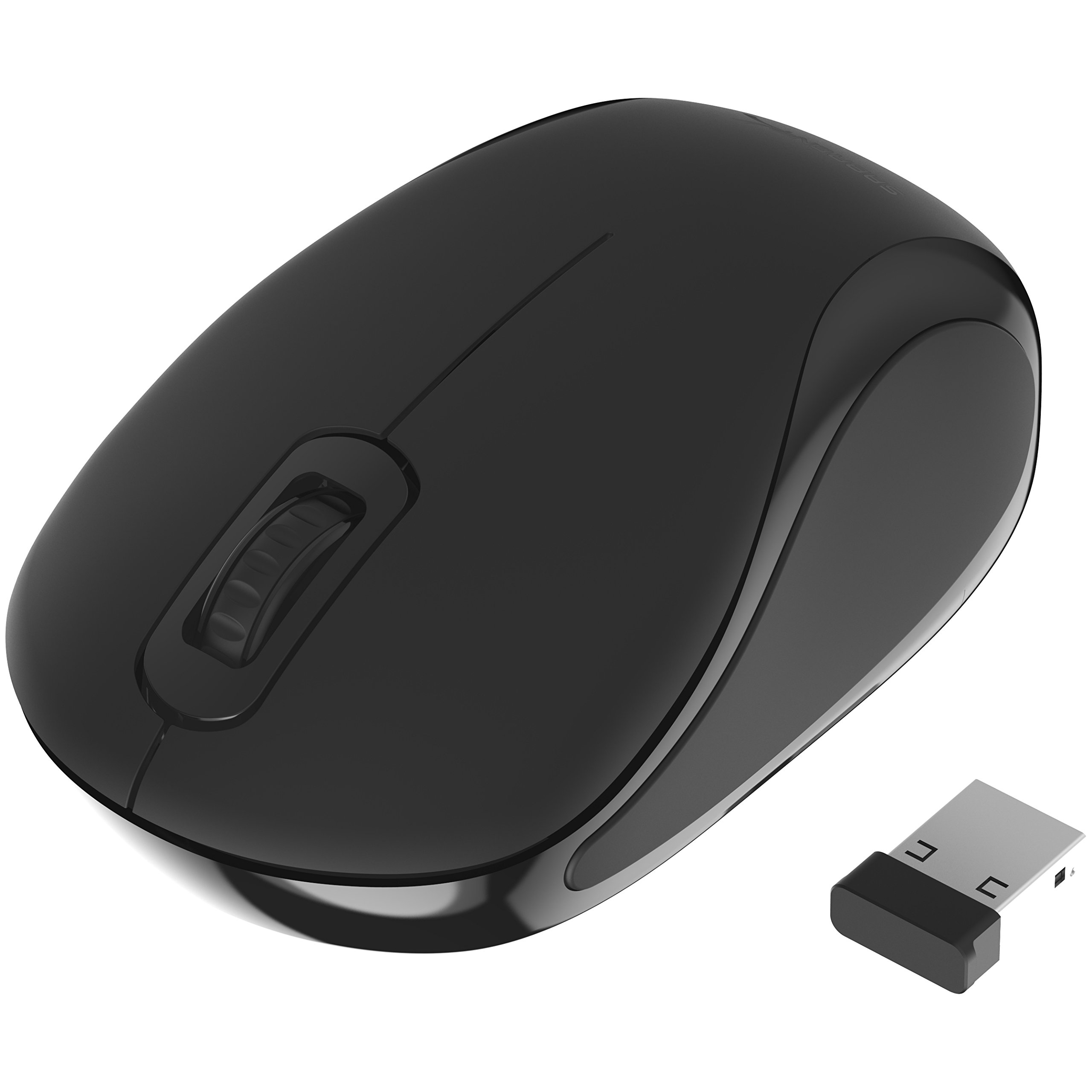
- Compact travel design with a nano receiver.
- 1200 dpi optical tracking.
- Ambidextrous, three-button design powered by one AAA battery.
Best For: Travelers who need a simple, low-profile wireless mouse for a computer bag.
SABRENT Rechargeable Wireless Mouse
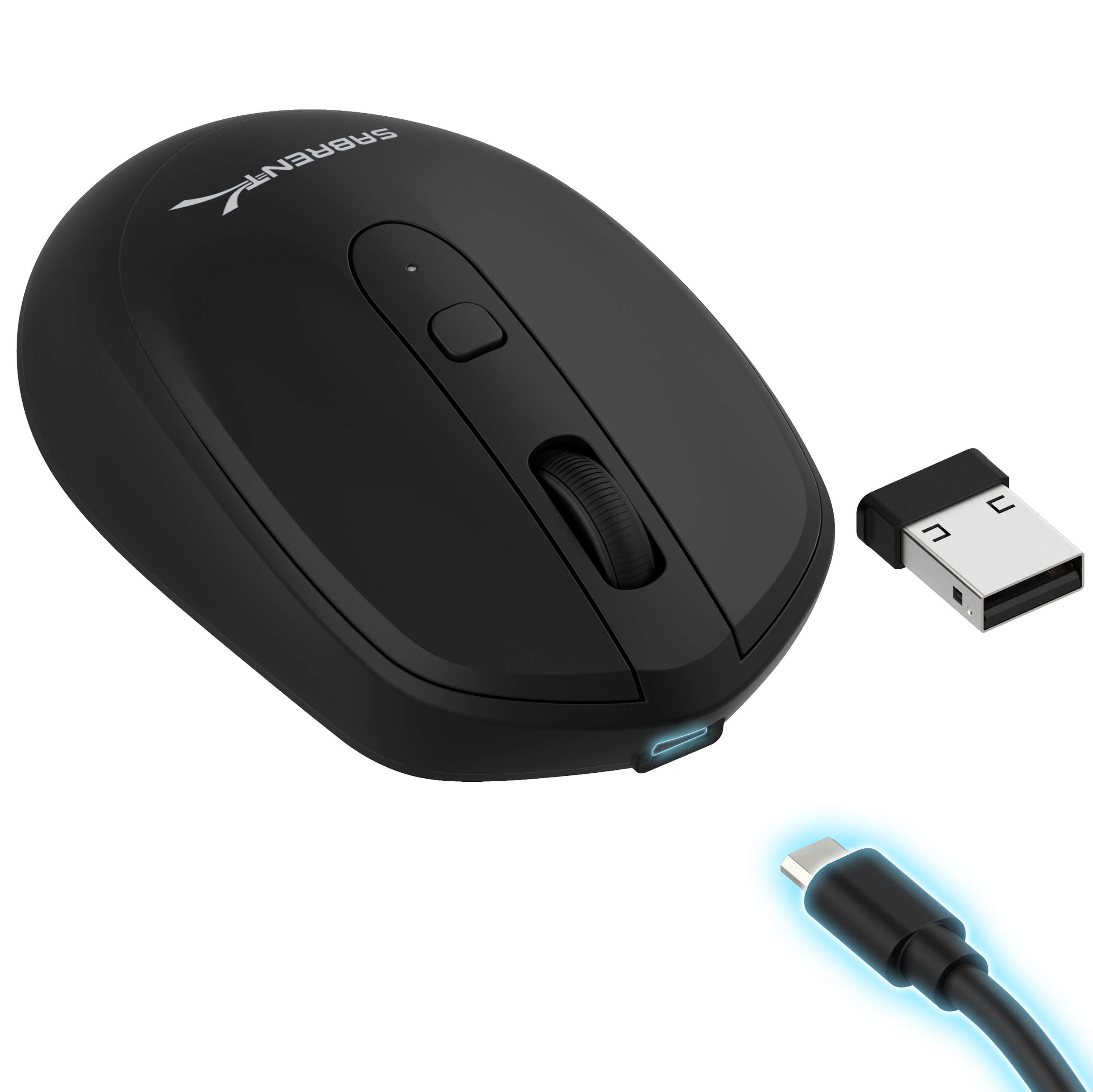
- Adjusts tracking among 800, 1200, and 1600 dpi.
- Rechargeable 600 mAh lithium battery.
- Three buttons and a DPI toggle with 2.4 GHz wireless.
Best For: Users who want a basic rechargeable wireless mouse with adjustable tracking.
SteelSeries Rival 3 Wireless Gen 2
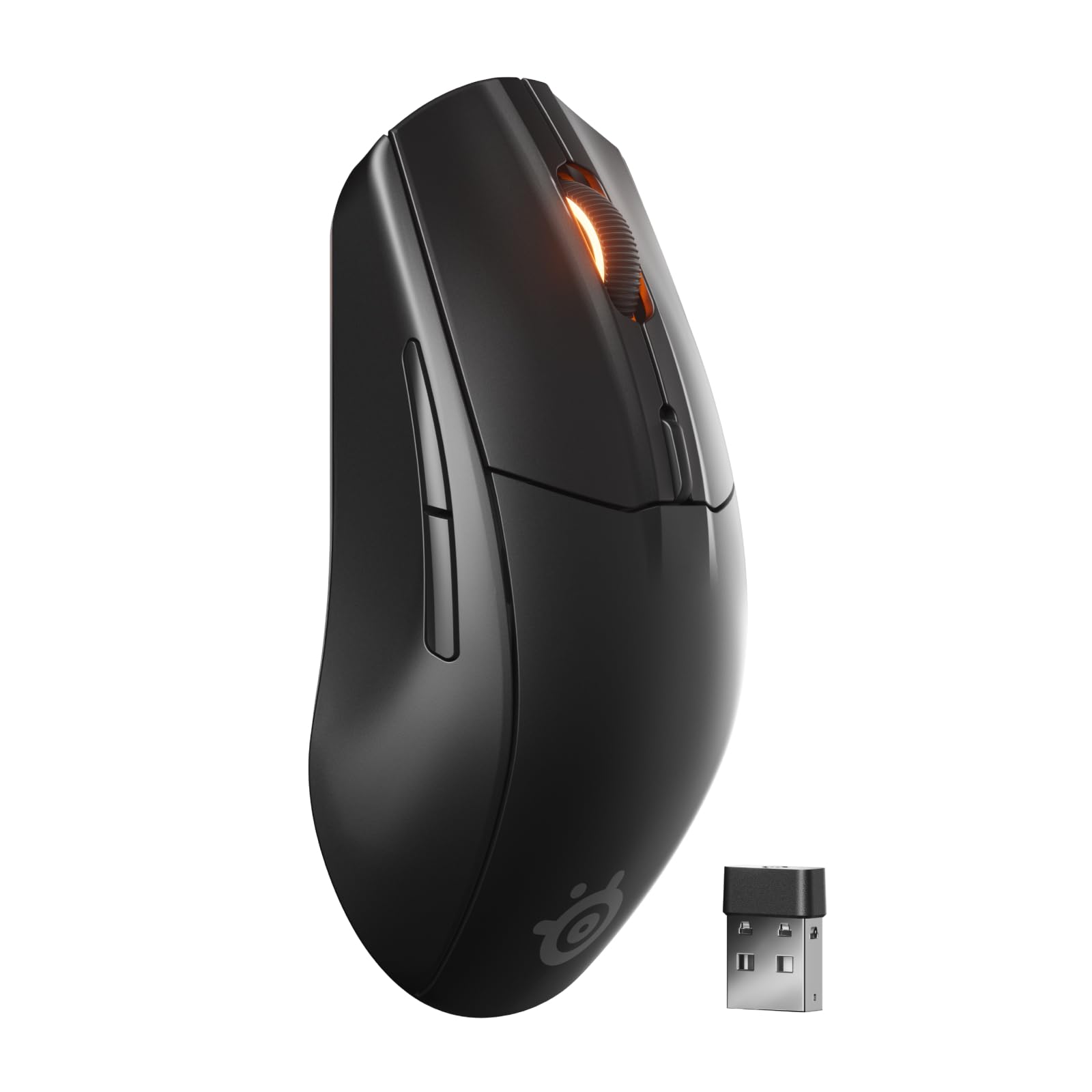
- Switches between gaming-grade 2.4 GHz and Bluetooth.
- TrueMove Air optical sensor rated at 18K DPI.
- Battery life is rated up to 200 hours on 2.4 GHz and 450 on Bluetooth.
Best For: Users who want one mouse for 2.4 GHz gaming and Bluetooth connections to other devices.
SteelSeries Prime Wireless
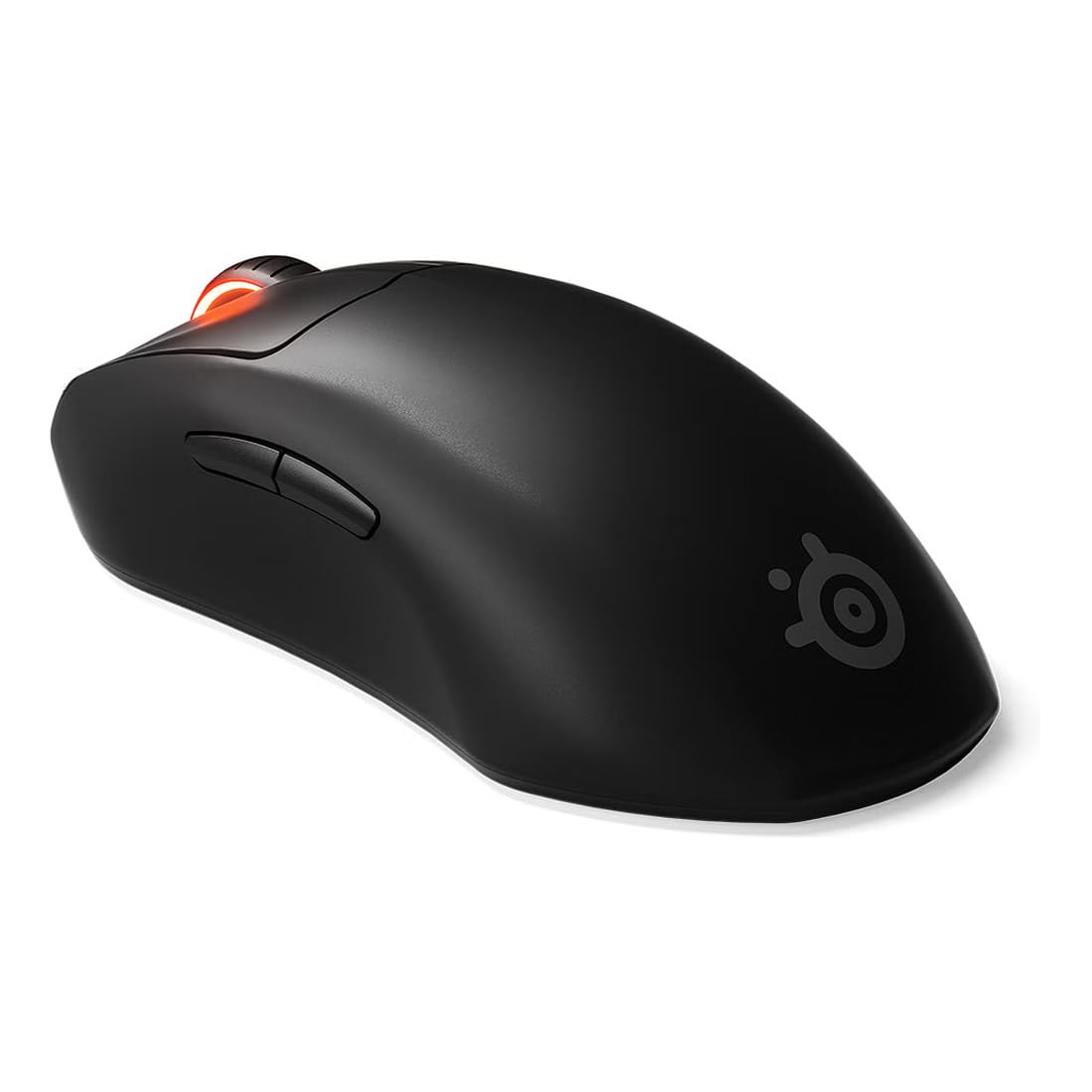
- Right-handed shape supports finger, palm, and claw grips.
- TrueMove Air sensor rated at 18K CPI, 400 IPS, and 40G.
- Quantum 2.0 wireless with up to 100-hour battery life.
Best For: Right-handed players seeking a lightweight wireless mouse with an FPS-focused shape and sensor.
SteelSeries Prime Mini Wireless
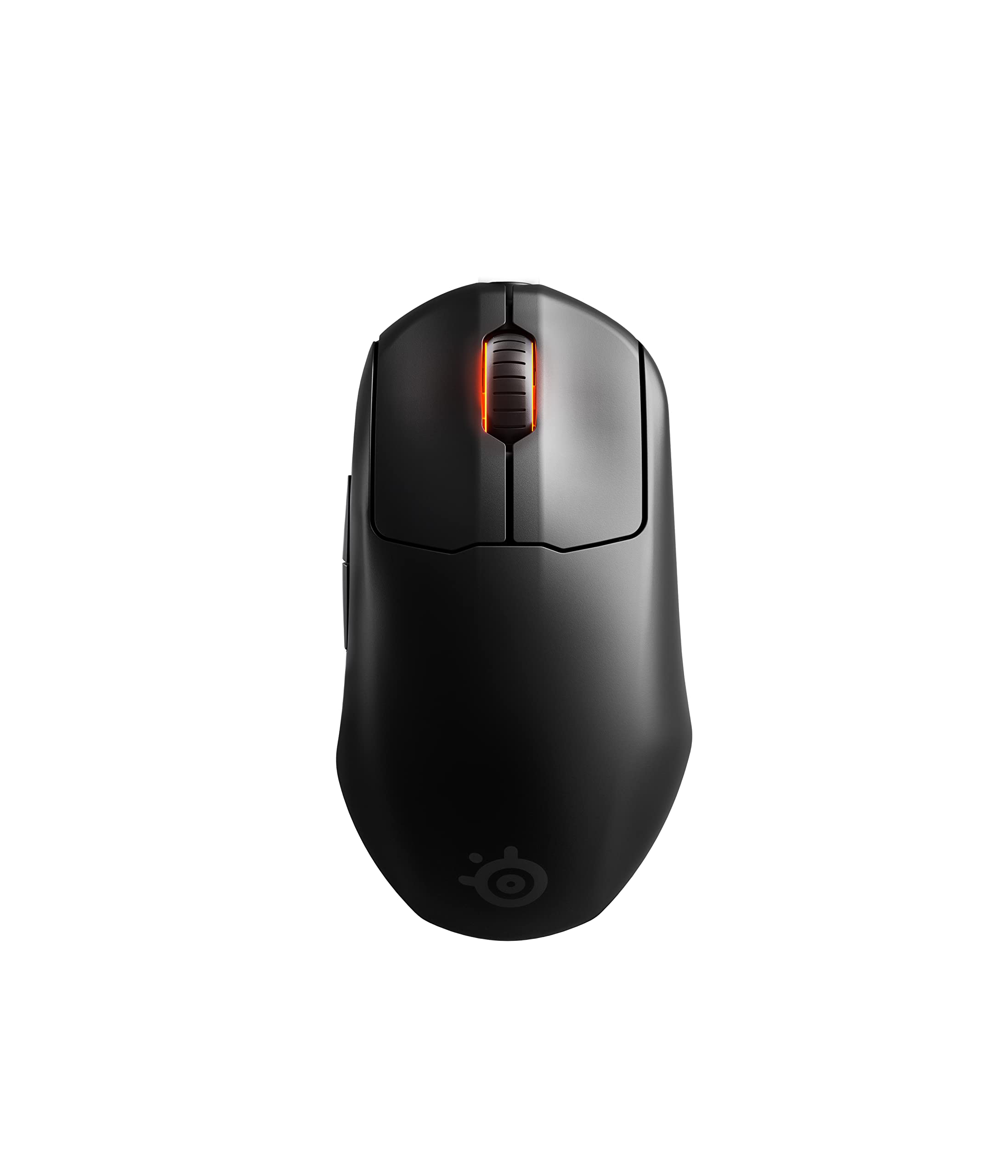
- Mini form factor weighs 74 g.
- TrueMove Air sensor rated at 18K CPI, 400 IPS, and 40G.
- Five programmable buttons and 100-hour battery life.
Best For: FPS players who want a compact, lightweight wireless gaming mouse.
Compact Multi-Device Work Mouse
JLab, GO Charge, Wireless Mouse, Bluetooth, USB Dongle, Multi-Device, Compact, Rechargeable, Black
The JLab GO Charge is a compact wireless mouse built for work on the go. It pairs with up to three devices through Bluetooth or a USB wireless dongle, making it practical for a laptop and other computers.
Adjustable DPI lets you tune cursor speed, while silent click buttons suit shared offices and calls. Its rechargeable battery lasts more than four months per charge, according to the product details.
Check that its compact shape suits your hand for long sessions, and confirm which connection method works best with your device.
Best For: People who want a small rechargeable mouse for travel and switching among several devices.
| Pros | Cons |
|---|---|
|
|
Choose this JLab if you carry a mouse between work locations and want a compact shape with three-device switching. Silent clicks and adjustable tracking also make it a useful everyday work option.
Its battery-life figure is a stated duration, so consider how often you use the mouse and whether that operating pattern suits you. Before buying, check the dimensions and shape against your hand, since compact models may feel different from a full-size mouse.
Magnetic Carrying Setup
ESR MagMouse Snap-to-Carry Bluetooth Mouse, Wireless Mouse for Laptop | Rechargeable Mouse with Built-in Charging Cable, Reusable Adhesive Holder, BT 5.0 + 2.4 GHz Connectivity, Ergonomic, White
The ESR MagMouse pairs Bluetooth 5.0 or a 2.4 GHz dongle with a snap-to-carry magnetic base. Its reusable adhesive holder attaches to a surface, letting the mouse clip into place for transport; check where you plan to attach it and whether that setup suits your laptop bag.
A built-in USB-C charging cable avoids carrying a separate cable, and the product details give up to 160 hours of use from a full charge. Six DPI levels and four-way scrolling support both everyday browsing and horizontal movement across wide documents or spreadsheets.
Best For: Laptop users who want a mouse and holder that attach together for mobile work.
| Pros | Cons |
|---|---|
|
|
Pick the MagMouse if keeping a mouse attached to a laptop bag or work surface is more useful than a conventional loose mouse. Its holder, built-in cable, dual connection options, and sideways scrolling distinguish it from simpler portable models.
The adhesive base requires a suitable attachment spot, so think through your carrying setup before choosing it. Check the physical dimensions and whether the holder fits how you store your laptop.
Quiet Full-Size Multi-Device Work
JLab, JBuds, Wireless Mouse, Bluetooth, USB Dongle, Multi-Device, Silent Click, Full-Size, Black
The JLab JBuds combines a full-size ergonomic shape with Bluetooth 5.2 and a USB wireless dongle. It can connect to as many as three devices, and its toggle makes it easier to move between computers during a workday.
Seven programmable buttons and up to three saved profiles add customization through the JLab Work app. Silent click buttons can be helpful in a shared office or during calls.
This model emphasizes a full-size working grip, so compare its size and controls with your desk space and preferred hand position before buying.
Best For: Desk users who want a full-size mouse with quiet clicks and customizable controls across devices.
| Pros | Cons |
|---|---|
|
|
Choose the JBuds if a full-size shape and configurable buttons matter more than minimizing the mouse's footprint. Its three-device connection and silent buttons fit a desk shared across computers or used during calls.
The app-based profiles provide another way to adapt controls to different tasks. Battery runtime and exact dimensions are not specified here, so check those details if charging frequency or fit is a deciding factor.
OLED Status Display
JLab, Epic, Wireless Mouse, Bluetooth, Multi-Device, OLED Display, Full-Size
This full-size JLab Epic adds an OLED screen that shows battery level and current DPI. It connects through Bluetooth 5.2 or a USB wireless dongle, supports up to three paired devices, and saves up to three custom profiles through the JLab Work app.
Adjustable tracking offers control for routine office work as well as more detailed cursor tasks. The product details identify an 800 mAh rechargeable battery but do not give runtime per charge.
Consider whether the on-mouse status display and profile controls are useful enough for your desk setup.
Best For: Desk users who want a full-size mouse with a screen for battery and DPI status.
| Pros | Cons |
|---|---|
|
|
Pick this Epic if you want visible battery and DPI status without relying on a separate app or indicator. It also combines full-size ergonomics, silent clicks, profile customization, and multi-device switching.
The capacity is given, but the available details do not state how long a charge lasts, so do not infer runtime from capacity alone. Check the size and charging details if either affects your desk routine.
Adjustable Vertical Grip
Contour Unimouse Ergonomic Vertical Mouse Adjustable 35°-70° Tilt Angle, 6 Programmable Buttons for Productivity, Customizable Thumb Rest for Wrist Pain Relief | Plug & Play Mac/PC - Wireless - Right
The Contour Unimouse takes a customizable approach to an ergonomic wireless mouse. Its tilt can be set between 35° and 70°, and the thumb support moves and rotates to alter the grip.
Six programmable buttons and a scroll wheel provide additional control for productivity tasks. The rechargeable battery is rated for up to 12 weeks per charge, and the mouse connects through a USB plug-and-play receiver to Windows or macOS devices.
It is designed specifically for right-handed users, so left-handed buyers should choose another option.
Best For: Right-handed users who want to adjust a vertical mouse's tilt and thumb support.
| Pros | Cons |
|---|---|
|
|
Choose the Unimouse if you want to change a vertical mouse's angle and thumb support rather than accept a fixed grip. Its adjustability and programmable buttons suit users who want to tailor their pointing setup for productivity.
The right-hand-only design is a decisive fit constraint, and connection is through a USB receiver. Check receiver compatibility with your computer and allow for time to find a comfortable angle.
Small Travel Mouse
SABRENT Mini Travel 2.4GHz Wireless Mouse with Nano Receiver (MS-WSML)
The SABRENT Mini Travel is a straightforward compact option for laptop bags and occasional travel. It uses a 2.4 GHz wireless connection through a nano receiver and has a three-button layout with ambidextrous orientation.
Optical tracking is rated at 1200 dpi, and the mouse is powered by one AAA battery. Its compact size and low-complexity controls make it a practical fit for basic pointing and text selection.
Check your computer's available USB ports and whether you prefer a rechargeable model before choosing it.
Best For: Travelers who need a simple, low-profile wireless mouse for a computer bag.
| Pros | Cons |
|---|---|
|
|
Choose the SABRENT if you want a simple travel mouse with a small receiver and ambidextrous controls. The 1200 dpi optical sensor covers basic pointing, while the three-button layout keeps controls uncomplicated.
It relies on a replaceable AAA battery, so consider whether you prefer that to charging. Confirm that your computer has a compatible USB port for the nano receiver.
Rechargeable Budget Simplicity
SABRENT 2.4GHz Rechargeable Wireless Mouse with Adjustable Resolution (MS-RCWM)
The SABRENT rechargeable mouse keeps the feature set simple: a 2.4 GHz wireless connection, three buttons, and a DPI toggle. Tracking can be adjusted among 800, 1200, and 1600 dpi, which gives a few practical cursor-speed choices without a more involved software setup.
It has a rechargeable 600 mAh lithium battery and supports fast charging. The available details do not give battery runtime or dimensions, so check those if you need a travel-size mouse or want to plan charging around a busy work schedule.
Best For: Users who want a basic rechargeable wireless mouse with adjustable tracking.
| Pros | Cons |
|---|---|
|
|
Pick this model if you want rechargeable power and straightforward controls without multi-device features. Its three DPI settings make it more adjustable than a fixed-speed basic mouse, while the 2.4 GHz connection requires a receiver.
Battery capacity alone does not indicate how long a charge lasts, and physical dimensions are absent. Check those details if endurance or portability is central to your choice.
Dual-Mode Gaming and Everyday Use
SteelSeries Rival 3 Wireless Gen 2 Gaming Mouse — 2.4GHz and Bluetooth — 18000 DPI TrueMove Air Optical Sensor — 60 Million Click Durability — Light-Weight — 100% PTFE Feet — Black
The SteelSeries Rival 3 Wireless Gen 2 offers both gaming-oriented 2.4 GHz wireless and Bluetooth. Its TrueMove Air optical sensor is rated at 18,000 DPI, and the product details give click latency of 1.9 ms. Battery life is rated up to 200 hours on 2.4 GHz or 450 hours over Bluetooth, using one AAA battery.
That mix can suit a user who wants a gaming mouse and a second-device connection. The listed performance figures are specifications, so consider your connection and battery preferences alongside the sensor.
Best For: Users who want one mouse for 2.4 GHz gaming and Bluetooth connections to other devices.
| Pros | Cons |
|---|---|
|
|
Choose the Rival 3 Gen 2 if you want both a gaming-oriented wireless mode and Bluetooth for another device. Its sensor and latency specifications target responsive play, while the longer Bluetooth battery-life figure may suit less demanding everyday use.
It uses an AAA battery rather than a rechargeable pack. Check whether the shape fits your grip and whether the 2.4 GHz receiver connection suits your setup.
Right-Handed FPS Control
SteelSeries Esports Wireless FPS Gaming Mouse - Ultra Lightweight, Prime Programmable, 18K CPI Sensor, Magnetic Optical Switches, PC/Mac, Black
The SteelSeries Prime Wireless is a right-handed gaming mouse shaped for FPS play and multiple grip styles, including finger, palm, and claw. It uses a TrueMove Air sensor rated at 18K CPI, with 400 IPS and 40G specifications, and Quantum 2.0 wireless rated for up to 100 hours of battery life.
Six buttons and magnetic optical switches round out the core controls. The product details identify a 2.72-ounce weight.
Check the listed dimensions against your hand and desk space, and confirm that the right-handed shape suits your grip.
Best For: Right-handed players seeking a lightweight wireless mouse with an FPS-focused shape and sensor.
| Pros | Cons |
|---|---|
|
|
Choose the Prime Wireless if you want an FPS-oriented, right-handed shape with multiple grip options and a defined sensor specification. It also includes six buttons and magnetic optical switches, while the battery figure is rated up to 100 hours.
Hand orientation is a firm limitation, and Bluetooth support is not specified. Check the provided dimensions against your hand before choosing it, especially if you prefer a smaller mouse.
Compact FPS Gaming Shape
SteelSeries Esports Mini Wireless FPS Gaming Mouse – Ultra Light – Prime Mini Edition – 5 Programmable Buttons – Lag-free 2.4GHz – 100H Battery – 18K CPI Sensor – Magnetic Optical Switches – PC/Mac
The SteelSeries Prime Mini Wireless uses a 74 g mini form factor for players who prefer a smaller gaming mouse. It is built around the TrueMove Air sensor with 18K CPI, 400 IPS, and 40G specifications, plus Quantum 2.0 wireless with a stated 100-hour battery life.
Five programmable buttons and magnetic optical switches support its FPS-focused design. Compared with a full-size gaming mouse, its compact dimensions may better suit smaller hands or a lighter setup.
Check that the reduced form factor still fits your grip before buying.
Best For: FPS players who want a compact, lightweight wireless gaming mouse.
| Pros | Cons |
|---|---|
|
|
Pick the Prime Mini if a compact gaming mouse is a better fit for your hand or setup than a standard-size option. It retains the TrueMove Air sensor specifications, wireless connection, and magnetic optical switches while using a 74 g mini form factor.
The listed details do not specify hand orientation or Bluetooth, so confirm those before purchase if either matters. Consider whether five programmable buttons provide the controls you need.
How to Choose Wireless Mice
How We Picked Wireless Mice
This group covers practical differences within wireless mice: compact travel designs, full-size office models, ergonomic grips, and gaming-focused controls. The selection favors products with distinct, clearly identified uses in the supplied details.
That means a small receiver mouse, a multi-device productivity mouse, an adjustable vertical mouse, and several gaming options each fill a different role.
The relevant decision is how and where you use the mouse. Travel users may care about compact size and carrying setup.
Desk users may value multi-device switching, quiet clicks, or programmable buttons. Gaming users may focus on sensor specifications, wireless mode, shape, and battery format.
Comparing Wireless Mice
The portable models differ in how they fit into a bag and connect. The SABRENT Mini uses a nano receiver and one AAA battery, while the ESR MagMouse includes a magnetic holder, a built-in USB-C cable, Bluetooth, and a 2.4 GHz option.
JLab's GO Charge is compact and adds three-device switching, with a rechargeable battery rated for more than four months per charge.
For a shared desk, the JLab JBuds and Epic both support multi-device switching and quiet clicks. The Epic adds an OLED display for battery and DPI, while the JBuds highlights seven programmable buttons and saved profiles.
The Contour Unimouse stands apart with adjustable tilt and thumb support, though it is designed for right-handed use.
Gaming models serve different setups. The Rival 3 Gen 2 supports both 2.4 GHz and Bluetooth and uses an AAA battery.
The Prime Wireless and Prime Mini focus on FPS control and magnetic optical switches; the Mini is the smaller 74 g form factor. Compare grip fit and connectivity details before deciding between them.
| Product | Standout features | Best for |
|---|---|---|
| JLab GO Charge Wireless MouseCheck Price |
| People who want a small rechargeable mouse for travel and switching among several devices. |
| ESR MagMouse Snap-to-CarryCheck Price |
| Laptop users who want a mouse and holder that attach together for mobile work. |
| JLab JBuds Wireless MouseCheck Price |
| Desk users who want a full-size mouse with quiet clicks and customizable controls across devices. |
| JLab Epic Wireless MouseCheck Price |
| Desk users who want a full-size mouse with a screen for battery and DPI status. |
| Contour Unimouse WirelessCheck Price |
| Right-handed users who want to adjust a vertical mouse's tilt and thumb support. |
| SABRENT Mini Travel Wireless MouseCheck Price |
| Travelers who need a simple, low-profile wireless mouse for a computer bag. |
| SABRENT Rechargeable Wireless MouseCheck Price |
| Users who want a basic rechargeable wireless mouse with adjustable tracking. |
| SteelSeries Rival 3 Wireless Gen 2Check Price |
| Users who want one mouse for 2.4 GHz gaming and Bluetooth connections to other devices. |
| SteelSeries Prime WirelessCheck Price |
| Right-handed players seeking a lightweight wireless mouse with an FPS-focused shape and sensor. |
| SteelSeries Prime Mini WirelessCheck Price |
| FPS players who want a compact, lightweight wireless gaming mouse. |
Choosing a Wireless Mouse for Work and Travel
A mouse that stays in a laptop bag needs a practical carrying and charging setup. The ESR holder clips the mouse into place and its base uses reusable adhesive, so consider where you will attach it.
The compact JLab GO Charge skips that holder but adds switching among three devices. The SABRENT Mini is simpler, with its nano receiver and replaceable AAA battery.
For travel, check the actual mouse size and the receiver or Bluetooth needs of your computer. Size and weight are not provided for several models.
If you move among devices during the day, multi-device pairing can save repeated pairing steps, while a single receiver model offers a more straightforward setup.
Ergonomic and Multi-Device Mouse Features
For long desk sessions, shape and control placement affect fit. The Contour Unimouse allows tilt adjustment from 35° to 70° and lets you reposition its thumb support.
It is a right-handed design, so hand orientation should be the first check. JLab's full-size JBuds and Epic offer ergonomic shapes and silent clicks, with programmable profiles for task changes.
Multi-device mice are useful when one pointer serves a laptop and desktop. The JLab models pair with up to three devices; the GO Charge also uses a compact design, while the JBuds and Epic are full-size.
The Epic's OLED screen shows battery and DPI. Runtime is not specified for some options, so verify charging details if you want fewer interruptions.
Which Wireless Mouse Fits Your Setup?
Choose the JLab GO Charge for compact work and frequent device switching. The ESR MagMouse fits buyers who want a mouse that attaches to a carrying holder.
For a quiet full-size desk mouse, compare the JLab JBuds and Epic: button customization favors the JBuds, while the Epic provides an OLED status display. The Contour Unimouse suits right-handed users who want to adjust their grip.
For basic travel use, the SABRENT Mini is a simple receiver-based choice; the rechargeable SABRENT adds adjustable DPI. For gaming, the Rival 3 Gen 2 provides 2.4 GHz and Bluetooth, while the SteelSeries Prime models emphasize FPS controls, with the Prime Mini offering a compact form.
Match the mouse's hand orientation, dimensions, connection method, and battery setup to your actual computer and routine.