The best WiFi router depends on where you use it, how many devices connect, and whether you need advanced home coverage or a travel-ready private network. Compare WiFi generations, band choices, wired ports, and mesh support to find a router that fits your internet setup and connected devices.
Quick Top Products
TP-Link Archer BE600
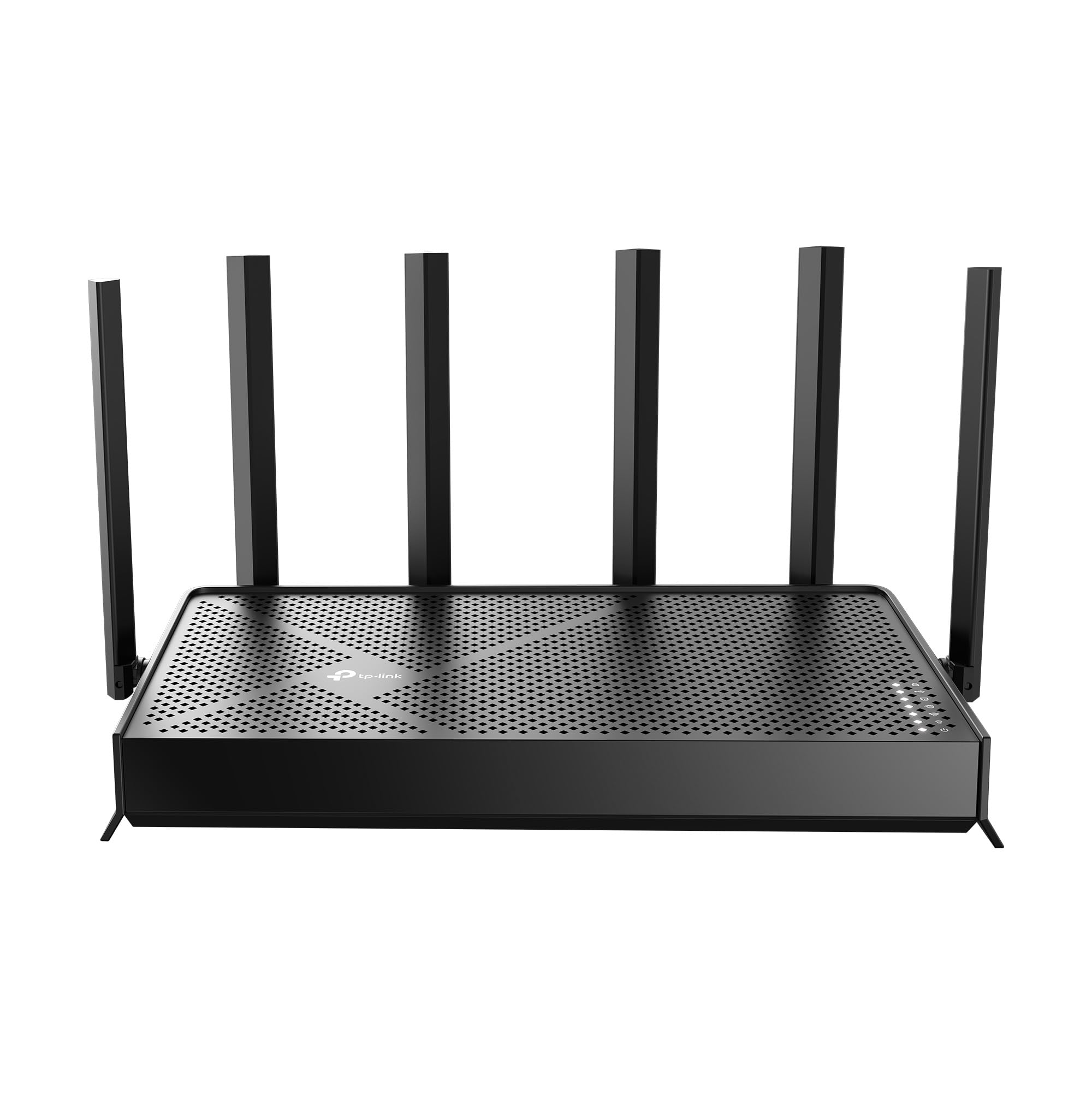
- WiFi 7 tri-band design supports up to 320 MHz channels.
- Coverage is rated up to 2,600 sq. ft. for up to 120 devices.
- Wired connections include one 10 Gbps and three 2.5 Gbps LAN ports.
Best For: Households wanting WiFi 7 tri-band service, broad stated coverage, and multiple multi-gig wired connections.

TP-Link Archer GE800
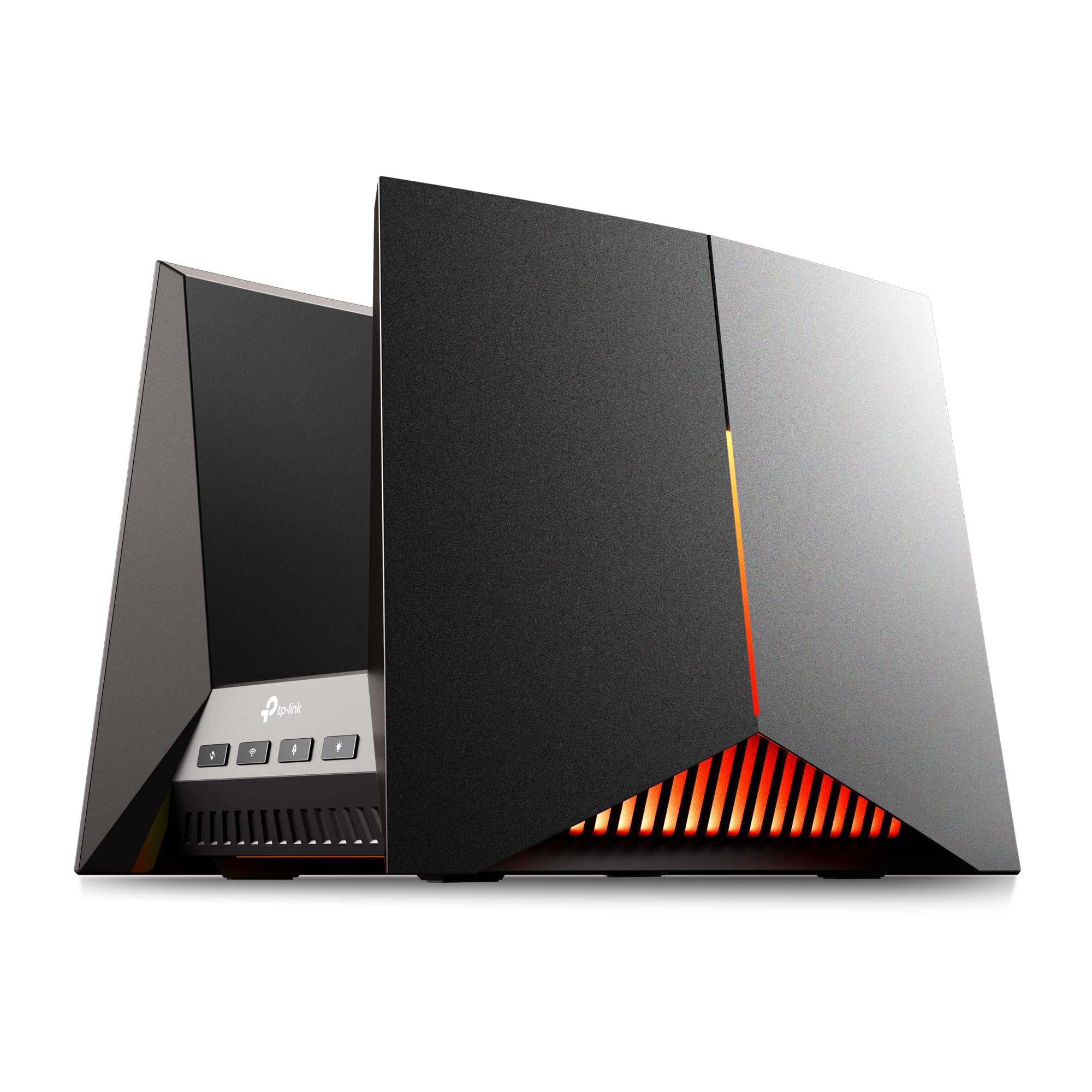
- Tri-band wireless supports up to 19 Gbps across 12 streams.
- The wired port selection includes two 10 Gbps and four 2.5 Gbps ports.
- A performance panel and customizable RGB lighting are included.
Best For: Gamers building a high-throughput network with multiple multi-gig wired connections and a dedicated gaming interface.
TP-Link Archer GE650
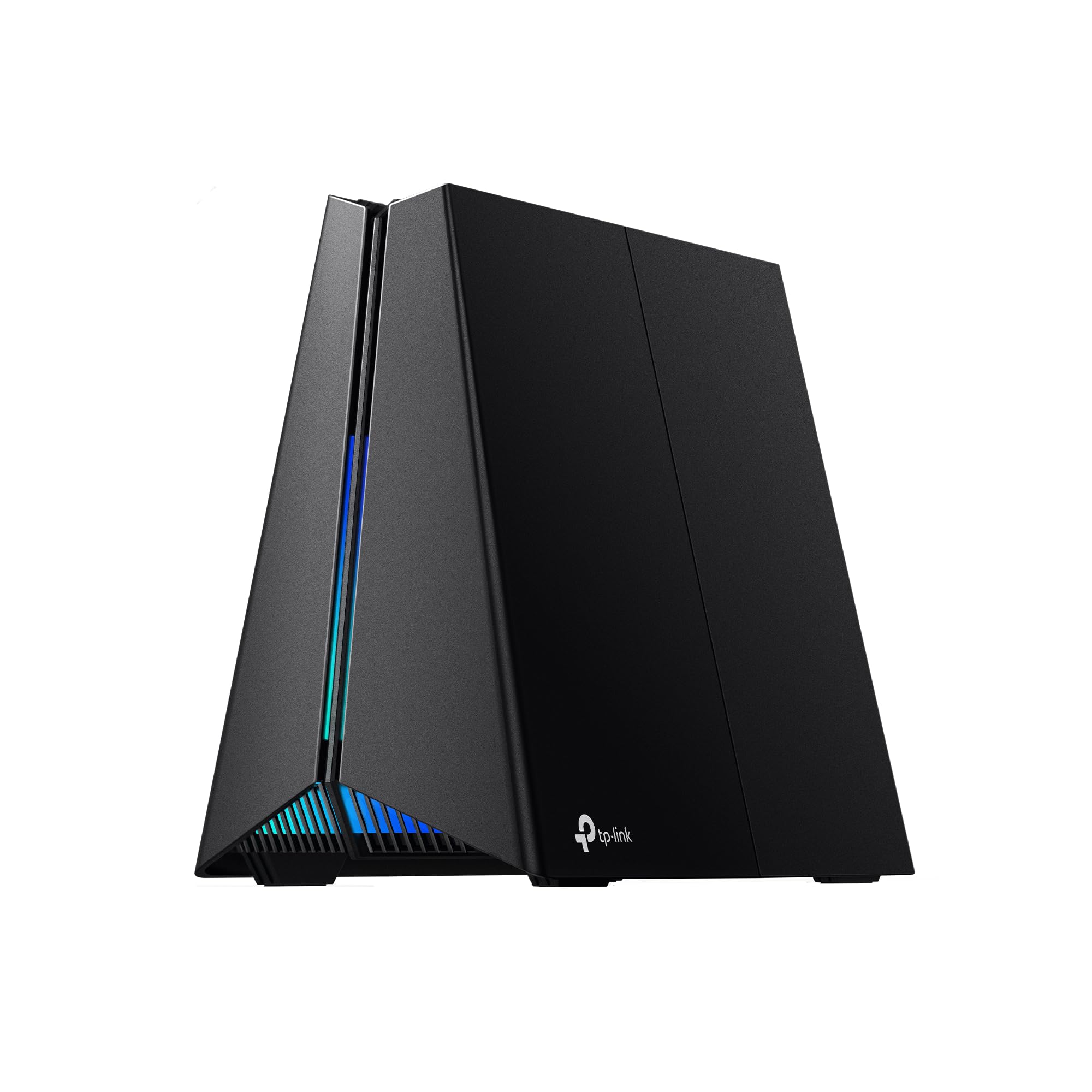
- Tri-band WiFi 7 includes a dedicated 5 GHz gaming band.
- Wired connectivity includes two 5 Gbps ports and three 2.5 Gbps ports.
- The game panel can prioritize game traffic and control RGB settings.
Best For: Gamers who want tri-band WiFi 7, a dedicated 5 GHz gaming band, and game traffic controls.
TP-Link Archer BE400
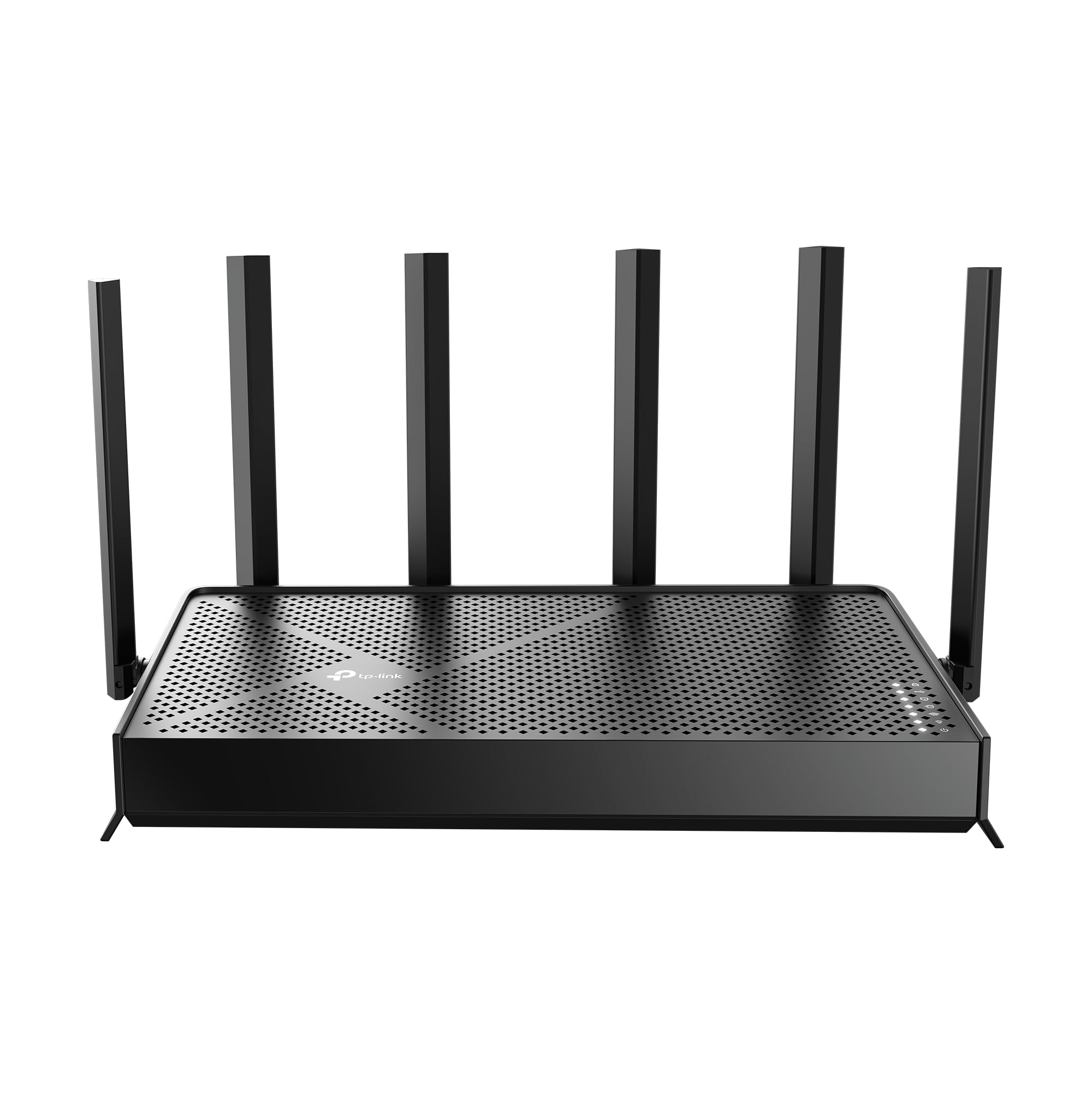
- WiFi 7 dual-band service supports up to 6.5 Gbps total bandwidth.
- Coverage is rated up to 2,400 sq. ft. for up to 90 devices.
- It has two 2.5 Gbps ports and three 1 Gbps LAN ports.
Best For: Homes seeking WiFi 7, a substantial stated coverage area, and multi-gig wired connections for several devices.
TP-Link Archer AXE75
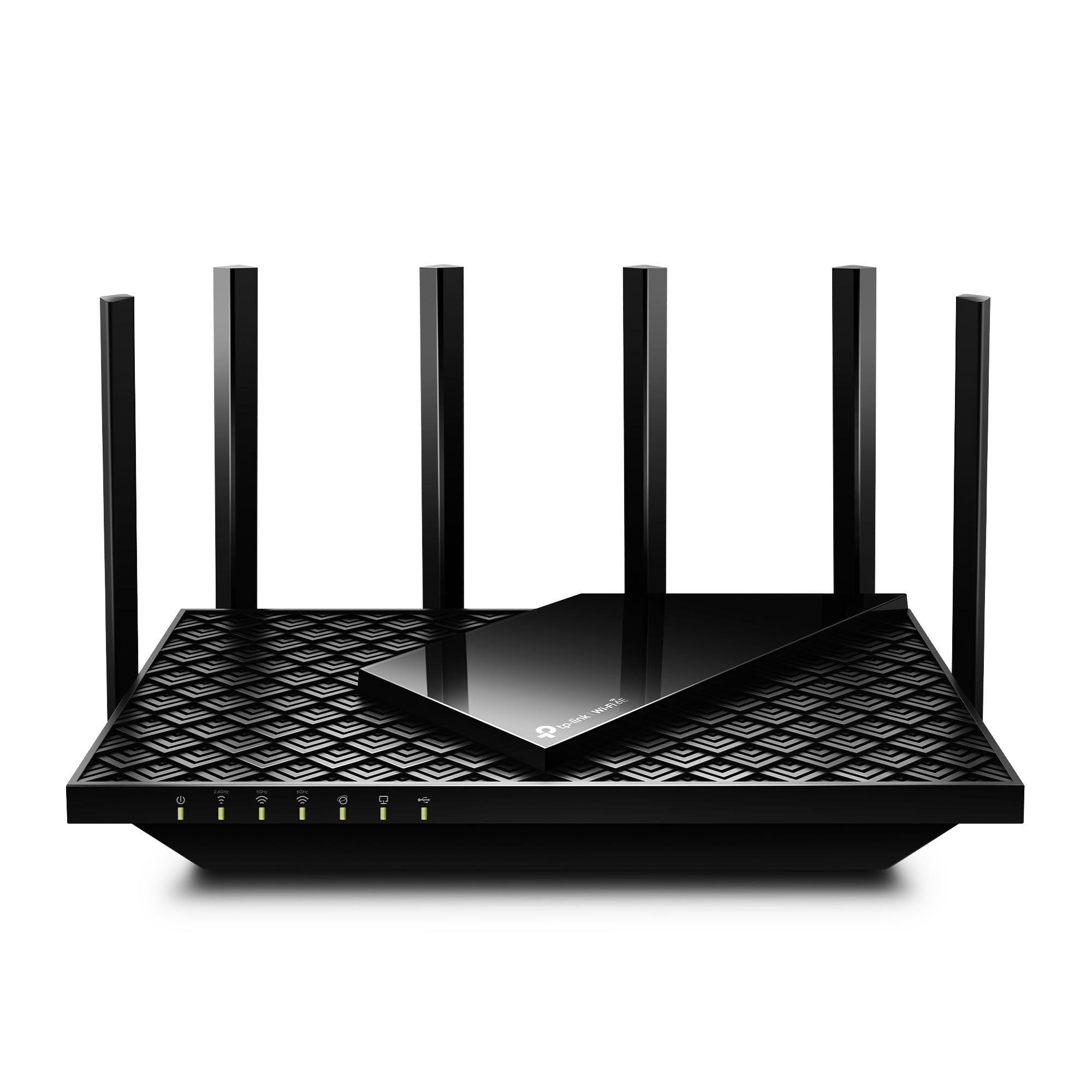
- Tri-band WiFi 6E includes 6 GHz and supports up to 5,400 Mbps.
- OFDMA helps increase the capacity for simultaneous device transmissions.
- The router supports OneMesh with a compatible extender.
Best For: Households with WiFi 6E devices that want tri-band service, OneMesh expansion, and VPN features.
TP-Link Archer BE230
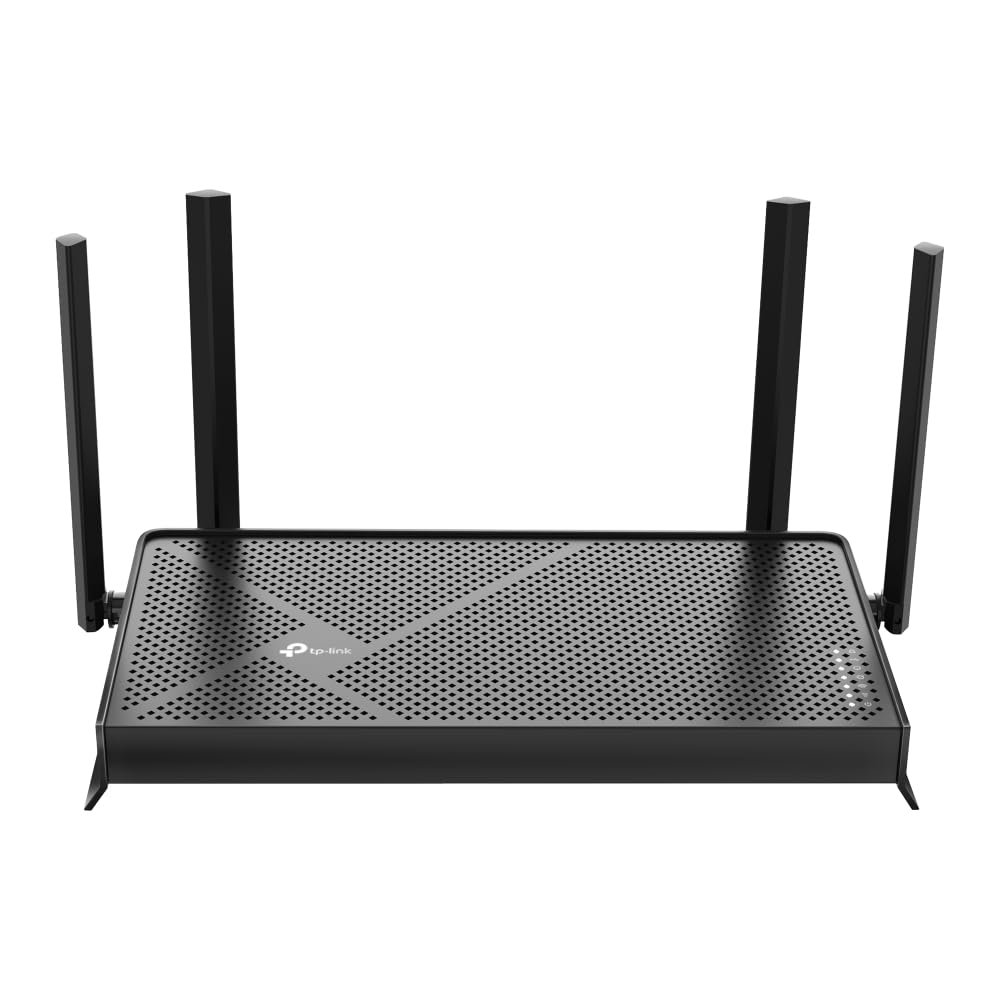
- WiFi 7 dual-band operation supports up to 2,882 Mbps on 5 GHz.
- It has one 2.5 Gbps WAN/LAN port, one 2.5 Gbps LAN port, and three 1 Gbps LAN ports.
- Coverage is rated up to 2,000 sq. ft. for up to 60 devices.
Best For: Homes upgrading to WiFi 7 that want multi-gig wired ports and mesh expansion without a tri-band requirement.
TP-Link Deco 7 BE23
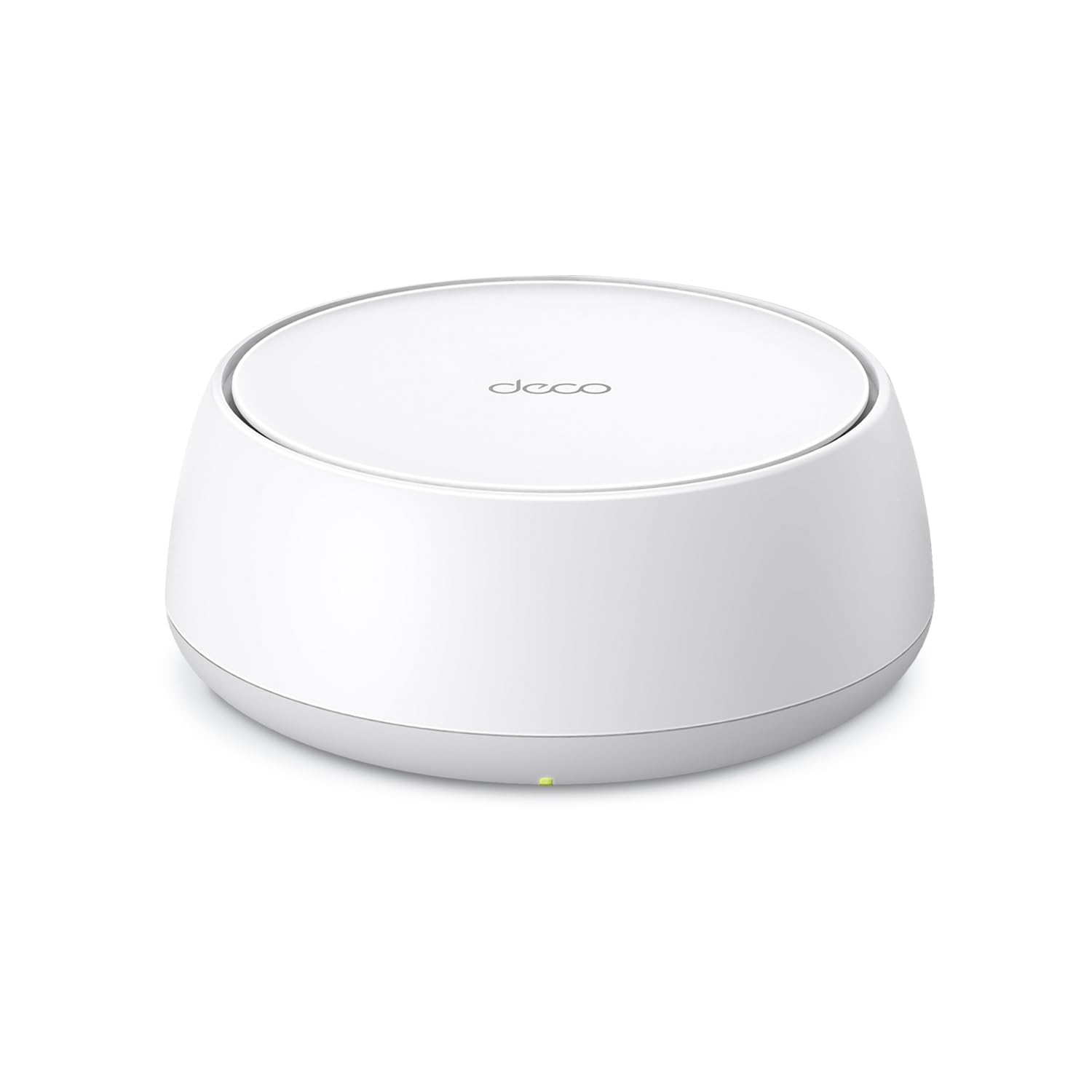
- This single-pack unit supports WiFi 7 dual-band speeds up to 3.6 Gbps.
- Coverage is rated up to 2,500 sq. ft. for up to 150 devices.
- It has two 2.5 Gbps WAN/LAN ports and supports wired backhaul.
Best For: Households wanting one mesh-capable WiFi 7 unit, a unified network name, and two 2.5 Gbps ports.
Tenda RX12 Pro V3.0
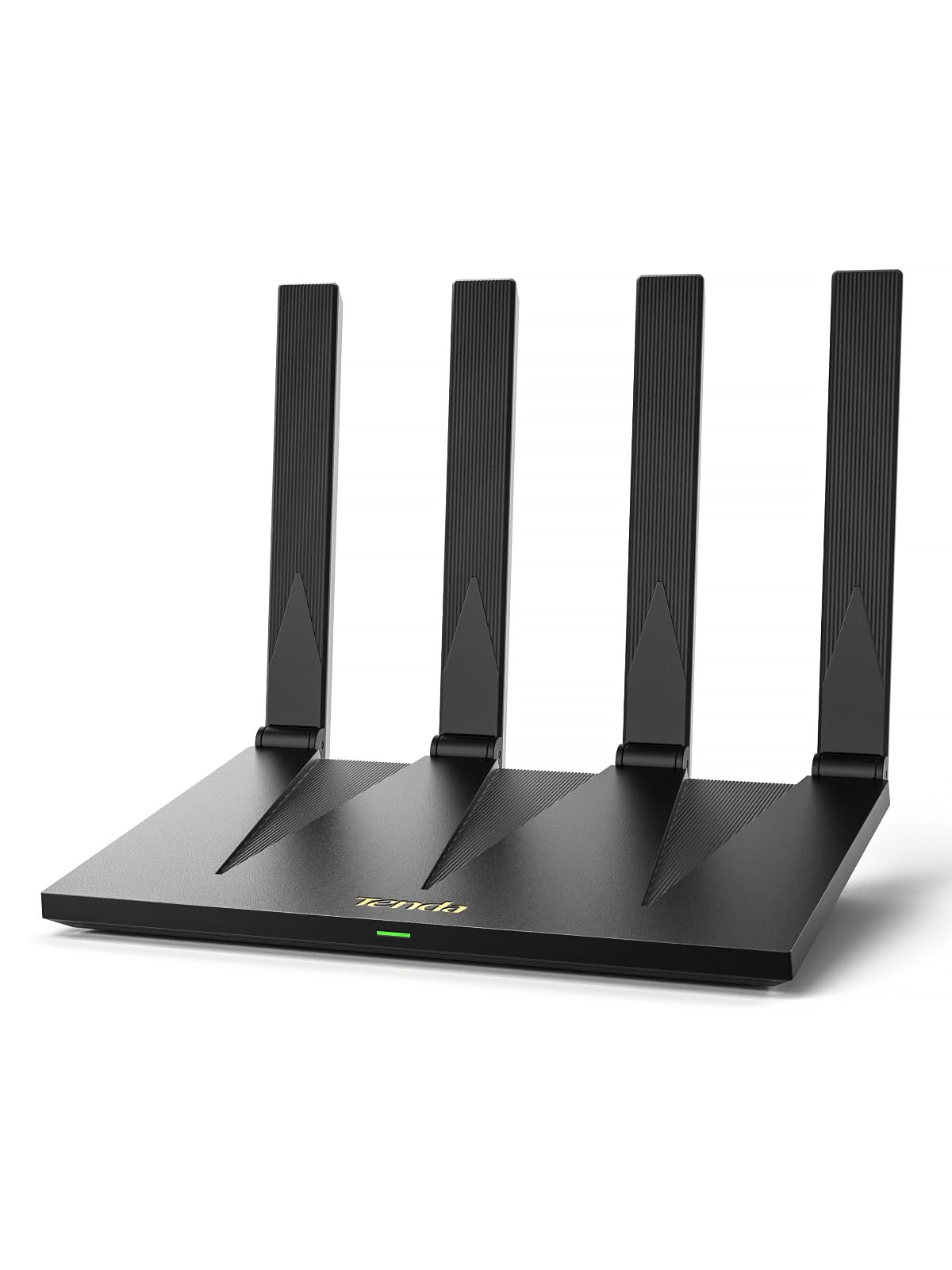
- WiFi 6 dual-band speeds are rated up to 2,402 Mbps on 5 GHz and 574 Mbps on 2.4 GHz.
- Four gigabit ports use automatic WAN/LAN recognition.
- NFC tap-to-connect requires a compatible Android device.
Best For: Budget-conscious home users wanting WiFi 6, gigabit ports, VPN support, and NFC-assisted connections.
TP-Link Roam 7 TL-WR3602BE
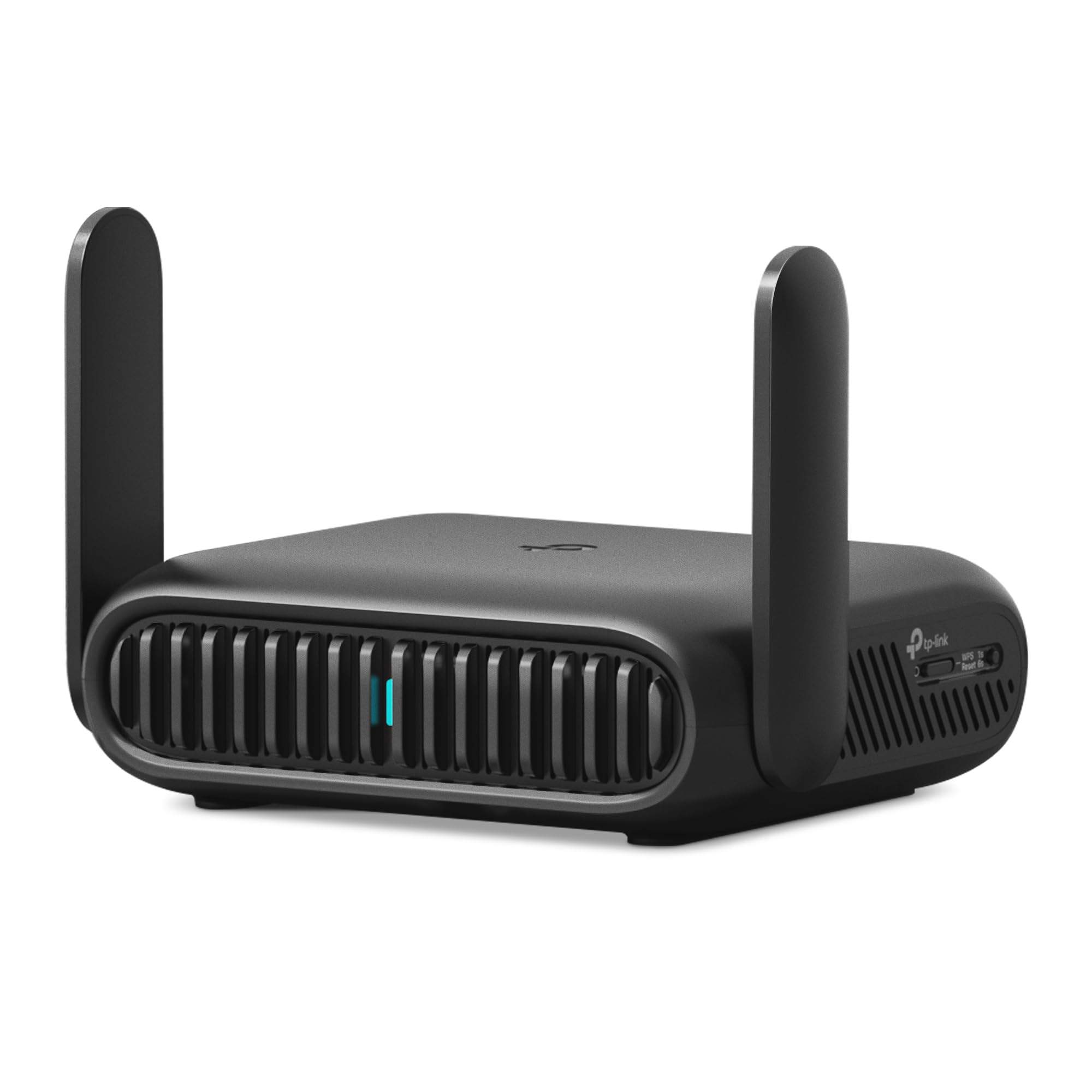
- Hotspot Mode shares public WiFi through a private network.
- It supports OpenVPN and WireGuard for VPN client and server use.
- USB-C power can come from the included adapter or a 5V PD source.
Best For: Travelers who want to share hotel or public WiFi privately across multiple devices with VPN support.
TP-Link Roam 6 TL-WR1512X
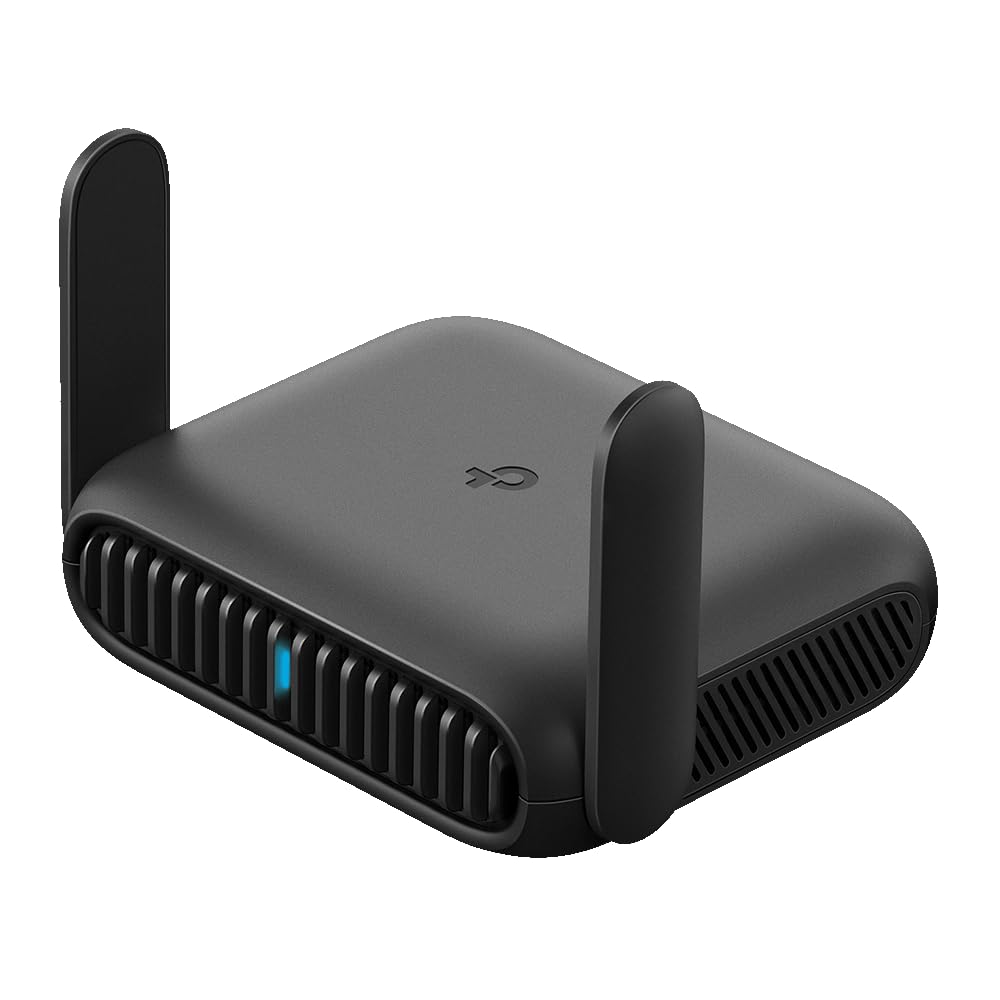
- WiFi 6 dual-band speeds reach up to 1,201 Mbps on 5 GHz and 300 Mbps on 2.4 GHz.
- It has one 1 Gbps WAN/LAN port and one 1 Gbps LAN port.
- OpenVPN and WireGuard are supported.
Best For: Travelers looking for a pocket-sized WiFi 6 router with VPN, USB-C power, and public WiFi sharing.
Tri-Band Coverage for Larger Homes
TP-Link Tri-Band BE9700 WiFi 7 Router (Archer BE600) – 10G Port, 2.5G Port, 3× 2.5G LAN, 320MHz Channel, Covers up to 2,600 sq. ft., 120 Devices, VPN, HomeShield Security
The Archer BE600 combines WiFi 7 with three bands and a selection of faster wired ports. Its listed coverage reaches up to 2,600 sq. ft. for up to 120 devices, making it a fit for a busy home with many connected gadgets.
The 10 Gbps WAN/LAN port can pair with a multi-gig modem, while three 2.5 Gbps LAN ports serve wired equipment. It also supports VPN client and server functions and HomeShield.
The tradeoff is that its dual 2.5 Gbps WAN/LAN port and dedicated 10 Gbps port require planning around which connection needs the fastest link.
Best For: Households wanting WiFi 7 tri-band service, broad stated coverage, and multiple multi-gig wired connections.
| Pros | Cons |
|---|---|
|
|
Choose this router when a home has compatible WiFi 7 devices, many connections, and a use for faster-than-gigabit wired ports. Its stated coverage and device capacity are among the larger figures in this group, while its tri-band design adds 6 GHz.
Check your internet plan, modem, and wired-device needs before buying; the port mix centers on 10 Gbps and 2.5 Gbps links.
Gaming-Focused Multi-Gig Setup
TP-Link Tri-Band BE19000 Wi-Fi 7 Gaming Router Archer GE800 | 12-Stream | 2×10G + 4×2.5G Ports, USB 3.0 | Turbo Acceleration, Dedicated Gaming Port & Panel, RGB Lighting, HomeShield, Free Expert Help
The Archer GE800 is a tri-band WiFi 7 router built around gaming features and fast wired connections. It supports up to 19 Gbps across three bands, with two 10 Gbps ports and four 2.5 Gbps ports for a demanding wired setup.
A game panel can show network and router performance, while Turbo Game Acceleration targets game traffic. The design also includes customizable RGB lighting and EasyMesh compatibility.
This is a specialized option; households that mainly browse and stream may not need its gaming-focused controls or extensive multi-gig ports.
Best For: Gamers building a high-throughput network with multiple multi-gig wired connections and a dedicated gaming interface.
| Pros | Cons |
|---|---|
|
|
Pick the GE800 for a gaming room where dedicated game controls and high-speed wired connections matter. Its listed port selection is more extensive than standard gigabit layouts, and EasyMesh gives an expansion option.
Its gaming emphasis makes it a less direct match for a home seeking only basic WiFi. Check whether your internet plan and wired devices can use its faster ports before choosing this specialized router.
Dedicated Gaming Band and Controls
TP-Link Tri-Band BE11000 Wi-Fi 7 Gaming Router Archer GE650 | 6-Stream 11 Gbps supports 320MHz | 2×5G + 3×2.5G Ports USB 3.0 | Game Acceleration, Dedicated Gaming Port & Panel, RGB Lighting|HomeShield
The Archer GE650 pairs tri-band WiFi 7 with a dedicated 5 GHz gaming band and a game panel for monitoring and prioritizing traffic. It supports Multi-Link Operation across its three bands and provides a 5 Gbps WAN port, a 5 Gbps LAN port, and three 2.5 Gbps LAN ports.
The router also includes customizable RGB settings and EasyMesh compatibility. These features target gaming households that can use multi-gig connections.
Its focus is more specialized than a basic home router, so consider whether you want the gaming interface and wired port speeds.
Best For: Gamers who want tri-band WiFi 7, a dedicated 5 GHz gaming band, and game traffic controls.
| Pros | Cons |
|---|---|
|
|
Choose the GE650 if gaming controls and a dedicated 5 GHz band are central to your setup. It has three 2.5 Gbps LAN ports and two 5 Gbps links for wired devices.
Check which devices need wired connections and whether your broadband can take advantage of those speeds. Its details focus on gaming features rather than coverage figures.
WiFi 7 With Broad Stated Coverage
TP-Link BE6500 Dual-Band WiFi 7 Router (BE400) – Dual 2.5Gbps Ports, USB 3.0, Covers up to 2,400 sq. ft., 90 Devices, Quad-Core CPU, HomeShield, Private IoT, Free Expert Support
The Archer BE400 is a dual-band WiFi 7 router with a stated coverage area of up to 2,400 sq. ft. for up to 90 devices. Its six streams and Multi-Link Operation target current WiFi 7 devices, while dual 2.5 Gbps ports and three 1 Gbps LAN ports give a flexible wired layout.
The Tether app or web interface handles setup and network management. It also supports EasyMesh expansion and VPN client and server functions.
Because this model is dual-band, it does not add a 6 GHz band; check device and band needs before selecting it.
Best For: Homes seeking WiFi 7, a substantial stated coverage area, and multi-gig wired connections for several devices.
| Pros | Cons |
|---|---|
|
|
The BE400 suits households seeking WiFi 7 and a stated coverage area with a moderate mix of multi-gig and gigabit ports. It offers dual-band operation, so buyers who specifically want 6 GHz should compare it with tri-band options.
Its claimed capacity covers a sizeable number of devices, but actual placement and obstacles still matter. Check modem compatibility and which wired devices need the 2.5 Gbps ports.
WiFi 6E With a Dedicated 6 GHz Band
TP-Link AXE5400 Tri-Band WiFi 6E Router (Archer AXE75), 2025 PCMag Editors' Choice, 2.5Gbps WAN Port for Gaming & Streaming, 6GHz Band, 160MHz, OneMesh, Dual-Core CPU, VPN & WPA3 Security
The Archer AXE75 brings WiFi 6E and a dedicated 6 GHz band to a tri-band home network. It supports up to 5,400 Mbps combined WiFi speeds and uses OFDMA to increase capacity for multiple devices.
OneMesh compatibility allows expansion with a compatible TP-Link extender, and VPN client and server functions add network flexibility. The router is a fit for homes with 6E-capable devices that can use the extra band.
It is an older WiFi generation than the WiFi 7 options here, and its title specifies a 2.5 Gbps WAN port rather than several multi-gig LAN ports.
Best For: Households with WiFi 6E devices that want tri-band service, OneMesh expansion, and VPN features.
| Pros | Cons |
|---|---|
|
|
Choose the AXE75 if you have WiFi 6E clients and want a tri-band router with a 6 GHz network and VPN features. OneMesh can extend the setup with a compatible TP-Link extender.
Its title identifies a 2.5 Gbps WAN port, while newer WiFi 7 candidates list broader multi-gig port mixes. Check whether your devices support 6E and whether the stated wired connections match your modem and local devices.
Dual 2.5 Gbps Ports for WiFi 7 Homes
TP-Link Dual-Band BE3600 Wi-Fi 7 Router Archer BE230 | 4-Stream | 2×2.5G + 3×1G Ports, USB 3.0, 2.0 GHz Quad Core, 4 Antennas | VPN, EasyMesh, HomeShield, MLO, Private IOT | Free Expert Support
The Archer BE230 is a dual-band WiFi 7 router with two 2.5 Gbps ports and three additional 1 Gbps LAN ports. It supports Multi-Link Operation and EasyMesh, and its stated coverage reaches up to 2,000 sq. ft. for up to 60 devices.
Four internal antennas and beamforming focus the signal toward hard-to-reach areas. The Tether app supports setup and management.
This model does not support 6 GHz, so buyers wanting the extra band should consider a tri-band router. It can suit a WiFi 7 home with a more modest stated device capacity.
Best For: Homes upgrading to WiFi 7 that want multi-gig wired ports and mesh expansion without a tri-band requirement.
| Pros | Cons |
|---|---|
|
|
The BE230 is a practical fit for a WiFi 7 upgrade where two multi-gig ports and mesh expansion are useful, but 6 GHz is not a requirement. Its stated coverage and device capacity are more modest than some other WiFi 7 candidates.
Check your home layout and connected-device count against those figures, and confirm the wired port plan. A separate modem is required for most internet service providers.
Single-Unit Deco Mesh Coverage
TP-Link Deco 7 BE23 Dual-Band BE3600 WiFi 7 Mesh Wi-Fi Router | 4-Stream 3.6 Gbps,160 Mhz | Covers up to 2,500 Sq.Ft | 2× 2.5G Ports Wired Backhaul | VPN, MLO, HomeShield, Free Expert Help, 1-Pack
The Deco 7 BE23 is a single-pack dual-band WiFi 7 mesh router with a stated coverage area of up to 2,500 sq. ft. and support for up to 150 devices. It has two 2.5 Gbps WAN/LAN ports and supports wired or wireless backhaul.
Deco mesh creates one network name and uses AI roaming as compatible Deco units work together. The 1-pack configuration is important: this offer contains one unit, so broader mesh coverage may require additional equipment.
Its dual-band design is a buying point to weigh when comparing routers.
Best For: Households wanting one mesh-capable WiFi 7 unit, a unified network name, and two 2.5 Gbps ports.
| Pros | Cons |
|---|---|
|
|
Choose this Deco unit if you want to start a mesh network with one WiFi 7 node and may add compatible Deco products later. Its stated coverage and device count are notable for a single pack, and dual 2.5 Gbps ports help with wired links.
Remember that the offer is one unit. Compare the mesh ecosystem and whether this dual-band router fits your needs before choosing it over a tri-band router.
WiFi 6 With VPN and NFC Joining
Tenda AX3000 WiFi 6 Router,Dual-Band Gigabit Wireless Internet Router, Mesh & AP Mode, Built-in VPN, NFC Tap-to-Connect, OFDMA MU-MIMO, Secure IoT Network for Home Gaming & 4K Streaming(RX12 Pro V3.0)
The Tenda RX12 Pro V3.0 is a dual-band WiFi 6 router with gigabit ports, mesh and access-point modes, and built-in VPN support. It supports OpenVPN and WireGuard after a firmware update, plus PPTP and L2TP, and offers a separate IoT WiFi network.
An NFC-enabled Android phone can connect by tapping near the router's NFC sticker. EasyMesh expansion and app management add flexibility.
This is a lower-generation option than the WiFi 7 and WiFi 6E models here, but its feature set covers common home networking needs. Check that your phone supports NFC and that you are comfortable with its firmware-dependent VPN support.
Best For: Budget-conscious home users wanting WiFi 6, gigabit ports, VPN support, and NFC-assisted connections.
| Pros | Cons |
|---|---|
|
|
This Tenda suits a home that needs WiFi 6, gigabit wired connections, and practical controls such as VPN and a separate IoT network. NFC joining is convenient only if the phone supports it, and the latest firmware is needed for OpenVPN and WireGuard.
It lacks the newer WiFi 7 generation and multi-gig ports of several alternatives. Check your internet speed and device needs before paying extra for newer wireless features elsewhere.
WiFi 7 Travel Router With 2.5 Gbps WAN
TP-Link Roam 7 BE3600 Wi-Fi 7 Portable Travel Router | Dual-Band, 2.5G Port, USB 3.0 | Multi-Modes in One | OpenVPN, WireGuard® | Public WiFi Sharing for Hotel/Cruise/RV/Plane | No 6 GHz | TL-WR3602BE
The Roam 7 is a portable dual-band WiFi 7 travel router designed to create a private network from public WiFi. Its Hotspot Mode, one-step captive portal authentication, and support for OpenVPN and WireGuard make it useful for hotel stays and remote work.
It can also operate as a router with Ethernet or USB phone tethering, or as an access point, repeater, or client. A 2.5 Gbps WAN port and USB-C power add flexibility.
The model does not support 6 GHz, and travel use depends on a suitable power source and the network connection available at each destination.
Best For: Travelers who want to share hotel or public WiFi privately across multiple devices with VPN support.
| Pros | Cons |
|---|---|
|
|
Choose the Roam 7 for travel when you want a private network for several devices on hotel or public WiFi, with VPN options and multiple connection modes. Its WiFi 7 label does not mean it has a 6 GHz band; this model is dual-band.
Check the available power source and whether your trip's network uses a captive portal. Its portable role differs from the fixed home routers in this guide.
Compact WiFi 6 Travel Router
TP-Link Roam 6 AX1500 Portable Wi-Fi 6 Travel Router Dual-Band | Easy Public WiFi Sharing | Hotel/RV/Travel Approved | Phone WiFi Tether | USB C 3.0 | Multi-Mode | OpenVPN, WireGuard® | TL-WR1512X
The Roam 6 is a pocket-sized dual-band WiFi 6 travel router that can turn public WiFi into a private network for multiple devices. It supports OpenVPN and WireGuard, handles one-step captive portal authentication through the Tether app, and can connect through USB phone tethering.
Router, access-point, repeater, and client modes cover different hotel or travel setups. The unit has a 1 Gbps WAN/LAN port and a 1 Gbps LAN port, and can use a compatible USB-C power source.
It is a travel-specific model, not a replacement for a higher-capacity fixed home router.
Best For: Travelers looking for a pocket-sized WiFi 6 router with VPN, USB-C power, and public WiFi sharing.
| Pros | Cons |
|---|---|
|
|
The Roam 6 is a fit for travelers who want a compact way to share hotel WiFi and use VPN connectivity across devices. Its stated WiFi speeds and gigabit ports support the travel-router role, along with several connection modes.
Check the power source and device count you need, and note that it is designed for portability rather than broad home coverage.
How to Choose Wifi Routers
How We Picked WiFi Routers
This roundup includes ten distinct router models spanning fixed home networks, gaming setups, mesh expansion, and travel. We prioritized candidates with clearly stated wireless generations, band configurations, wired-port details, and use-specific features such as VPN support or game controls.
The selections cover WiFi 6, WiFi 6E, and WiFi 7, with both dual-band and tri-band designs. Stated coverage and device capacity help frame each home model, while port speeds distinguish everyday wired layouts from multi-gig setups.
The travel routers are included for a separate need: sharing hotel or public WiFi privately on the move.
Comparing WiFi Routers for Different Homes
The Archer BE600 and BE400 offer tri-band and dual-band WiFi 7 respectively. The BE600 adds a 10 Gbps port and a higher stated coverage and device capacity; the BE400 has dual 2.5 Gbps ports and a 2,400 sq. ft. coverage figure.
The BE230 is another dual-band WiFi 7 choice with two 2.5 Gbps ports, but its stated coverage and device count are more modest.
For WiFi 6E, the Archer AXE75 supplies a 6 GHz band and OneMesh support. The Deco 7 BE23 is a single-pack mesh unit with two 2.5 Gbps ports and a unified-network approach.
Gaming-focused buyers can compare the GE650's dedicated gaming band and panel with the GE800's larger port selection and higher stated total wireless bandwidth.
| Product | Standout features | Best for |
|---|---|---|
| TP-Link Archer BE600Check Price |
| Households wanting WiFi 7 tri-band service, broad stated coverage, and multiple multi-gig wired connections. |
| TP-Link Archer GE800Check Price |
| Gamers building a high-throughput network with multiple multi-gig wired connections and a dedicated gaming interface. |
| TP-Link Archer GE650Check Price |
| Gamers who want tri-band WiFi 7, a dedicated 5 GHz gaming band, and game traffic controls. |
| TP-Link Archer BE400Check Price |
| Homes seeking WiFi 7, a substantial stated coverage area, and multi-gig wired connections for several devices. |
| TP-Link Archer AXE75Check Price |
| Households with WiFi 6E devices that want tri-band service, OneMesh expansion, and VPN features. |
| TP-Link Archer BE230Check Price |
| Homes upgrading to WiFi 7 that want multi-gig wired ports and mesh expansion without a tri-band requirement. |
| TP-Link Deco 7 BE23Check Price |
| Households wanting one mesh-capable WiFi 7 unit, a unified network name, and two 2.5 Gbps ports. |
| Tenda RX12 Pro V3.0Check Price |
| Budget-conscious home users wanting WiFi 6, gigabit ports, VPN support, and NFC-assisted connections. |
| TP-Link Roam 7 TL-WR3602BECheck Price |
| Travelers who want to share hotel or public WiFi privately across multiple devices with VPN support. |
| TP-Link Roam 6 TL-WR1512XCheck Price |
| Travelers looking for a pocket-sized WiFi 6 router with VPN, USB-C power, and public WiFi sharing. |
Choosing a WiFi Router for Gaming and Multi-Gig Devices
Start with the wired devices that stay near the router. A desktop, console, NAS, or multi-gig modem may need faster Ethernet than a standard gigabit port.
The GE800 offers two 10 Gbps and four 2.5 Gbps ports, while the GE650 uses two 5 Gbps and three 2.5 Gbps LAN ports. The BE600's 10 Gbps WAN/LAN connection and three 2.5 Gbps LAN ports serve a broader home-network role.
Wireless bands matter too. A tri-band router can provide a 6 GHz band on the WiFi 6E AXE75 and WiFi 7 BE600, GE650, and GE800.
The BE400 and BE230 are dual-band WiFi 7 models and do not add 6 GHz. Check which bands your phones, laptops, and consoles support; a router's newest generation alone does not establish compatibility with every device.
What to Consider in a Travel WiFi Router
Travel routers solve a different problem from fixed home routers. The Roam 7 and Roam 6 can share a public WiFi connection through a private network, and both support VPN protocols.
The Roam 7 adds WiFi 7 and a 2.5 Gbps WAN port, while the Roam 6 is a pocket-sized WiFi 6 model with gigabit ports. Both support USB-C power, so plan for an appropriate adapter or power source.
Hotels may use captive portals that require a login page. The Roam models include one-step captive portal authentication through the Tether app, which can simplify connecting multiple devices after the initial login.
Consider whether you will use hotel WiFi, Ethernet, or phone tethering, and check whether the router's modes match your trip. Neither model supports 6 GHz according to the Roam 7 details, and the Roam 6 is described as dual-band.
Who Should Buy Which WiFi Router
For a large home with WiFi 7 devices and several fast wired connections, consider the Archer BE600. For an expanding mesh setup, the Deco 7 BE23 is a single-unit starting point; plan for additional compatible Deco units if one node does not suit the layout.
Choose the GE650 or GE800 when gaming controls and multi-gig wired connections are central, with the GE800 offering the larger stated wired port selection.
The Archer AXE75 fits a WiFi 6E home that wants 6 GHz and OneMesh. The BE400 or BE230 suit dual-band WiFi 7 needs, with their different stated coverage, capacity, and port mixes guiding the choice.
The Tenda RX12 Pro V3.0 offers WiFi 6 with gigabit ports, a separate IoT network, and VPN features. For trips, choose between the Roam 7's WiFi 7 travel role and the more compact WiFi 6 Roam 6.